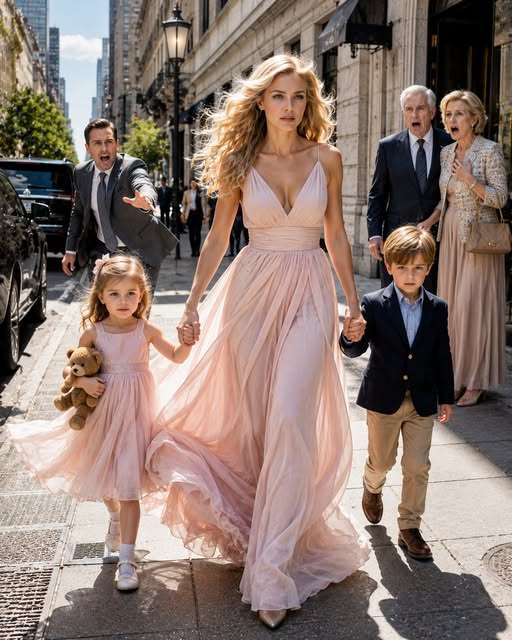
The conference room at Blackwell & Pierce smelled like polished walnut, expensive cologne, and the kind of confidence that only came from people accustomed to winning.
Across the long glass table sat my soon-to-be ex-husband, Adrian Caldwell, surrounded by three attorneys in tailored suits. They looked less like lawyers and more like men hired to make inconvenient people disappear from paperwork.
Adrian barely glanced at me.
He checked his watch instead.
In his mind, the divorce was already finished. He was probably thinking about the private fertility clinic across Manhattan, where his mistress, Lauren Blake, was waiting for an ultrasound.
To Adrian, I was nothing more than a delay between his old family and the shiny new one he had already chosen.
I sat with my hands clasped tightly in my lap.
My name is Elena Parker.
I wore a plain cream sweater, dark pants, and no jewelry. My hair was pulled into a loose ponytail. I looked exactly the way Adrian expected me to look after ten years of marriage and months of humiliation.
Tired.
Defeated.
Broken.
“Can we finish this?” Adrian snapped, tapping his fountain pen against the table. “I have a family waiting for me.”
Family.
The word still hurt.
But I kept my eyes lowered.
Beside me, my attorney, Daniel Reeves, pushed a thick stack of documents toward Adrian’s legal team.
That stack was the entire reason I had survived the previous six months without losing my mind.
It was bait.
The settlement appeared absurdly generous to Adrian.
I was surrendering my claims to the Southampton house, most of my interest in Caldwell Holdings, and access to a family trust worth several million dollars.
On paper, it looked like financial suicide.
A desperate woman walking away from everything just to make the divorce stop.
Adrian’s lead attorney, Martin Chase, adjusted his glasses and began reading.
His eyes changed almost immediately.
He leaned toward Adrian and whispered something.
For the first time all morning, Adrian looked directly at me.
A slow smile spread across his face.
“Wow, Elena,” he said. “I knew you were emotional, but I didn’t think you’d give up this much.”
I said nothing.
He leaned back.
“I suppose motherhood isn’t quite as valuable when millions of dollars are involved.”
I bit the inside of my cheek.
Keep your head down.
Let him enjoy it.
That was the plan.
Martin and the other attorneys became so focused on the property transfers that they barely slowed down for the later clauses.
Page after page.
Accounts.
Shares.
Real estate.
Trusts.
Then page forty-one.
Buried inside a section titled International Residency and Educational Relocation was a paragraph written in the same dry language as everything around it.
Party B, the mother, retained sole authority to establish the permanent international residence and citizenship status of the minor children for educational and personal welfare purposes.
Party A voluntarily surrendered all rights to physical custody, visitation, relocation objections, and future legal interference in exchange for the financial concessions described in the agreement.
Daniel had warned me not to look at Adrian when they reached it.
So I didn’t.
Martin skimmed the page.
Turned it.
And kept going.
“Everything appears acceptable,” he finally said. “Mr. Caldwell, sign here. Initial here. And again on the final page.”
Adrian did not ask a single question.
He signed.
Again.
Again.
Then he stood and buttoned his jacket.
With a few strokes of ink, he had traded Noah and Emma for money he believed he had just protected.
He gave me one last contemptuous look.
“Enjoy whatever little apartment you end up in.”
Then he walked out.
The door closed behind him.
My hands stopped trembling.
Daniel stared at me.
“He signed it.”
“Yes.”
“He actually signed the custody waiver.”
I lifted my head.
“Of course he did.”
Daniel let out a breath.
“Why were you so sure?”
“Because arrogance makes people read only the parts they believe they’re winning.”
I stood.
“Call the driver. We need to get to JFK.”
The hardest part wasn’t getting Adrian to sign.
The hardest part was getting out before he understood what he had done.
The international terminal at JFK was packed.
Rolling suitcases.
Children crying.
Announcements echoing overhead.
People moving in every direction.
I held Emma’s hand tightly while Noah walked beside me with his backpack over one shoulder.
Our flight to Lisbon was boarding.
“Stay close,” I told them.
“Mom, are we late?” Noah asked.
“A little.”
That was easier than explaining the truth.
Miles away, Adrian’s victory was beginning to collapse.
The court system registered the signed agreement electronically.
That triggered notices to the lawyers managing the children’s accounts.
One of those attorneys apparently called Adrian immediately.
My phone began vibrating before we even reached security.
Adrian.
Again.
Again.
Again.
I turned the phone face down.
Daniel sent me one message.
He knows.
I handed our passports to the gate agent.
“Final boarding for Flight 612 to Lisbon.”
We moved down the jet bridge.
My phone continued vibrating.
Later, Daniel told me what happened next.
Adrian had been sitting beside Lauren at the clinic when the call came.
He left her there.
Ran to the parking garage.
Drove toward JFK.
Apparently, he purchased the first expensive ticket he could find just to get through security.
He arrived after we had boarded.
I was fastening Emma’s seat belt when she looked at me.
“Mommy, why are you shaking?”
“I’m okay, sweetheart.”
Then I looked through the airplane window.
There he was.
Adrian stood inside the terminal near the glass, breathing hard, his jacket open, tie hanging loose.
He saw me.
His face changed.
He started pounding on the glass.
I couldn’t hear him.
That made it almost peaceful.
Airport security moved toward him.
He pointed at the plane.
At me.
At the children.
Then his phone lit up.
I had sent one message.
You traded your children for property you already thought belonged to you. Congratulations on the deal.
He read it.
His knees seemed to weaken.
Two officers pulled him away from the window.
The jet bridge disconnected.
The aircraft began moving.
I turned my phone off.
Emma rested her head against my arm.
Noah looked out the window.
As New York disappeared beneath the clouds, I finally breathed.
We were free.
But I knew the divorce had only been the first move.
Adrian cared about appearances almost as much as he cared about money.
So I had prepared something for both.
That evening, while the children slept in our temporary apartment in Lisbon, I opened my laptop.
Back in New York, the Caldwell Foundation Gala was underway at the Plaza Hotel.
It was one of those events built entirely around the illusion that rich families were morally superior because they gave away a fraction of what they controlled.
Adrian’s father, Richard Caldwell, sat at the center table.
Richard had built the family business through real estate, private equity, and political connections.
He was the real patriarch.
Adrian had always lived in his shadow.
That night, Adrian planned to solve that problem.
He and Lauren were going to announce her pregnancy.
A son.
A new Caldwell heir.
I watched the livestream.
Adrian stepped to the podium wearing a black tuxedo.
Lauren stood beside him in a dark green gown, one hand resting carefully on her stomach.
“Tonight is about legacy,” Adrian said.
I almost laughed.
Then he continued.
“Lauren and I are honored to share that the Caldwell family is entering a new chapter. We are expecting a son.”
Applause filled the ballroom.
I pressed a key on my laptop.
The giant screens behind Adrian went black.
Then a medical report appeared.
A DNA report.
Probability of Paternity: Adrian Caldwell — 0.00%
Probability of Paternity: Richard Caldwell — 99.99%
The applause stopped.
Adrian turned.
Lauren froze.
Richard’s face went gray.
Then the ballroom speakers came alive.
Lauren’s recorded voice filled the room.
“Richard, relax. Adrian believes everything I tell him. Once the baby is born and the trust opens, we’ll have exactly what we wanted. He thinks the child is his.”
The room exploded.
People stood.
Phones appeared.
Reporters rushed toward the stage.
Adrian stared at Lauren.
Then at his father.
His entire face twisted.
“You slept with my father?”
Lauren backed away.
“Adrian, please—”
He grabbed her arm.
“Tell me!”
Security moved in immediately.
Richard shouted.
Lauren screamed.
The livestream camera shook as photographers crowded forward.
Within minutes, the story was everywhere.
The perfect Caldwell dynasty had begun tearing itself apart in front of the same society it had spent decades impressing.
I closed the laptop.
For the first time that day, I thought the war might actually be over.
I was wrong.
Six months passed.
Portugal became home.
Noah started at an international school and quickly became obsessed with soccer.
Emma made friends with an elderly baker downstairs who let her decorate pastries after school.
I returned to architecture consulting, something I had abandoned during my marriage because Adrian constantly described my career as “cute but unnecessary.”
I rented a bright apartment near Cascais.
The ocean was fifteen minutes away.
The children laughed more.
I slept better.
Then Adrian’s mother arrived.
Her name was Margaret Caldwell.
And unlike Adrian, Margaret did not confuse anger with strategy.
I was outside Noah’s school one afternoon when a black Mercedes stopped at the curb.
Four men in dark suits stepped out.
Then Margaret emerged.
She wore a charcoal coat, pearls, and the expression of a woman who believed nations were simply larger rooms where someone had forgotten to recognize her authority.
I stepped between her and the school entrance.
“What are you doing here?”
Margaret smiled.
“Did you think crossing the Atlantic made you unreachable?”
“If any of your people approach the school, I’m calling the police.”
“Oh, please. I’m not here to kidnap anyone.”
She removed a thick envelope from her handbag.
“I’m here to tell you what happens next.”
I did not take it.
Margaret moved closer.
“The Caldwell name is being destroyed. Richard is facing investigations. Adrian has become a public embarrassment. Lauren disappeared. And your son is now the only legitimate male descendant of this family.”
“Noah is my son.”
“He is also a Caldwell.”
“Adrian signed away his rights.”
“Adrian signed something while emotionally compromised.”
I almost smiled.
Margaret continued.
“My attorneys are preparing international litigation. Kidnapping. Fraud. Custody interference. Financial extortion. We will freeze your money. We will challenge your residency. We will bury you in legal expenses until you cannot afford to fight.”
She dropped the envelope near my feet.
“Bring Noah and Emma back to New York within forty-eight hours.”
“And if I don’t?”
Her smile became colder.
“I will make your life very small.”
Then she returned to the car.
For several seconds, I stood there while children poured out of the school around me.
Margaret thought she had found the frightened version of me.
She had not.
The woman Adrian married would have panicked.
The woman standing outside that school had spent six months preparing for exactly this possibility.
The next afternoon, I sent Margaret an address.
A café in the center of Lisbon.
Public.
Crowded.
Impossible to control.
She arrived with two bodyguards.
I was already sitting beneath a yellow awning, drinking coffee.
Margaret lowered herself into the chair across from me.
“I hope you brought the children’s passports.”
“I didn’t.”
Her eyes sharpened.
I reached into my bag.
“But I brought something else.”
I placed a silver USB drive on the table.
Then a thick file.
Margaret laughed.
“What is this? Another performance?”
“Open it.”
“I don’t take orders from you.”
“Then leave. But if you do, you’ll probably be arrested before your plane clears Portuguese airspace.”
That got her attention.
She opened the file.
The first page contained financial transfers.
The second contained offshore entities.
The third connected several Caldwell charitable foundations to shell companies.
By page four, Margaret’s fingers had begun trembling.
I stirred my coffee.
“Living in that house for ten years gave me a great deal of time.”
She looked up.
“What did you do?”
“I protected myself.”
The truth was simpler than she expected.
Years earlier, I had discovered unusual financial files on the family network while helping Adrian recover documents from a damaged laptop.
I made copies.
Then more copies.
I began saving anything that looked suspicious.
Richard’s offshore accounts.
Private foundation transfers.
Payments routed through companies linked to Miami developments.
Tax structures that didn’t match declared revenue.
And signatures.
Margaret’s signatures.
I had kept everything as insurance.
Not because I planned to destroy them.
Because by then, I had already learned that wealthy families behaved differently when they believed you had no evidence.
Margaret flipped another page.
“These documents were stolen.”
“They were preserved.”
“You hacked private accounts.”
“Then feel free to tell a judge that while explaining why your charity foundation transferred millions through companies under criminal investigation.”
Her face hardened.
I pushed the USB toward her.
“The complete records are there. Copies exist elsewhere.”
“You’re threatening me.”
“No. I’m giving you a decision.”
I leaned closer.
“If you pursue international custody litigation against me, this material goes to American and European financial authorities. Immediately.”
Margaret stared at me.
“The investigation would destroy you too.”
“No.”
I shook my head.
“You never gave me access to decision-making authority. Remember? I was the irrelevant wife. That was your favorite description of me.”
For the first time, Margaret had no answer.
I continued.
“You can spend the next several years fighting me and explain every transaction in this file to regulators. Or you can return to New York and never interfere with my children again.”
Her breathing grew shallow.
I had never seen Margaret afraid.
It made her look older.
Not weaker.
Just human.
Eventually, she closed the folder.
She did not touch the USB.
She stood.
“This isn’t finished.”
“Yes,” I said. “It is.”
Her bodyguards followed her across the plaza.
Margaret never returned.
Three months later, federal investigators formally expanded their inquiry into Richard’s financial network.
I never had to release everything.
The existence of the evidence was enough to end Margaret’s custody campaign.
Richard eventually faced multiple charges connected to fraud and financial crimes.
Margaret withdrew almost entirely from public life.
Adrian lost his position in the company.
Caldwell Holdings sold major assets.
The family name that once opened doors became something people whispered about.
A year after I left New York, an envelope arrived.
Adrian’s handwriting was on the front.
For several hours, I left it unopened on the kitchen counter.
That evening, after Noah and Emma went to bed, I carried it onto the balcony.
The Portuguese night was warm.
Somewhere below, someone was cooking garlic.
Music drifted from another apartment.
I opened the letter.
Elena,
I don’t know whether you’ll read this.
I’ve lost almost everything.
The company is being dismantled. My father is facing prison. My mother barely speaks to anyone. Lauren vanished after taking what she could from one of my private accounts.
The apartment is empty.
I keep thinking about Noah and Emma.
I keep thinking about the agreement I signed because I cared more about money than what I was giving away.
I know what that makes me.
I was cruel to you. I humiliated you. I treated the children like obligations instead of the best part of my life.
I am not asking you to come back.
I know I have no right.
I’m not even asking to see them.
I only want you to tell them someday that I loved them, even if I was too selfish to know how to act like it.
I’m sorry.
Adrian.
I read the letter twice.
A year earlier, those words would have destroyed me.
I would have searched each sentence for the man I once thought existed.
I would have wondered whether regret meant redemption.
Whether loneliness meant love.
Whether suffering meant he finally understood mine.
But standing there that night, I felt almost nothing.
Not triumph.
Not rage.
Not pity.
Adrian had become distant.
A person from a life that no longer belonged to me.
Inside, Noah laughed at something Emma said.
They were supposed to be sleeping.
I smiled.
Then I took a lighter from the small table beside me.
I held Adrian’s letter over the flame.
The edge caught.
His apology curled.
Blackened.
Turned to ash.
I watched the wind carry the pieces over the balcony.
I did not save the letter for the children.
They did not need their father’s late regret as proof they had been worthy of love.
They already knew they were loved.
That was enough.
The Caldwells had built their entire identity around inheritance.
Bloodlines.
Names.
Money.
Control.
They believed legacy was something transferred through trusts and company shares.
They were wrong.
Legacy is what your children learn from watching you live.
Noah and Emma would not inherit my fear.
They would not inherit my silence.
They would not learn that love meant surrendering yourself to keep someone else comfortable.
They would know that walking away can be an act of love.
That boundaries can protect what forgiveness cannot.
That money is useful, but freedom is worth more.
People sometimes imagine revenge as watching someone lose everything.
That was never the part that mattered most to me.
The real victory came later.
Ordinary mornings.
School lunches.
Emma covered in flour at the bakery downstairs.
Noah complaining about homework in two languages.
Working again.
Paying my own bills.
Sleeping without wondering what version of Adrian would walk through the door.
The sweetest revenge was not the collapse of the Caldwell empire.
It was waking up one morning and realizing I had gone three entire days without thinking about any of them.
That was freedom.
I had once believed I needed to destroy their world to save myself.
In the end, all I really needed was to stop allowing their world to define mine.
I turned away from the balcony.
Inside, my children were laughing.
I walked toward them.
And for the first time in years, I was not someone’s wife.
Not someone’s enemy.
Not the woman who had been abandoned.
I was simply myself.
And that was the greatest inheritance I could ever give them.
