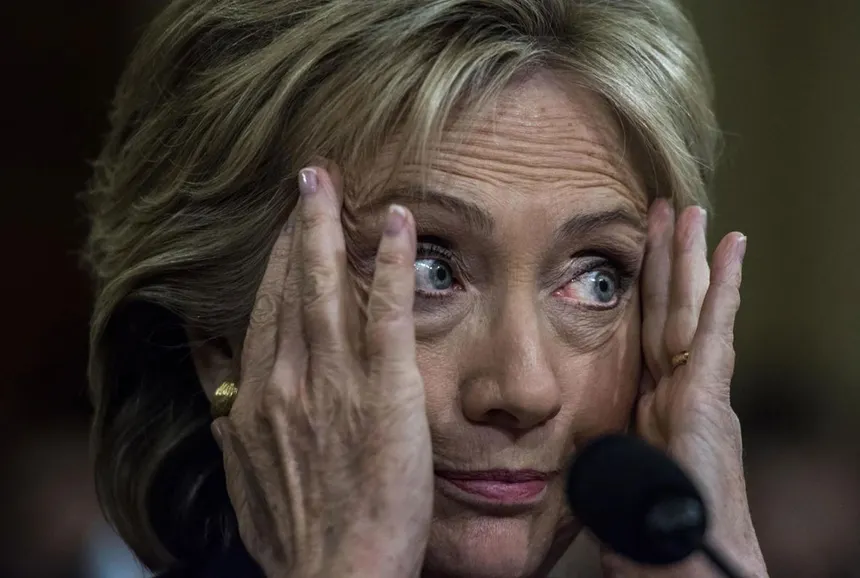
Hillary Clinton: From First Lady to Senator, Secretary of State and Historic Presidential Nominee
Few American political figures have spent as much time in the national spotlight as Hillary Rodham Clinton.
Over several decades, she has been an attorney, First Lady of Arkansas, First Lady of the United States, United States senator from New York, Secretary of State, presidential candidate, author and advocate.
Her career has also been marked by intense political debate. Supporters and critics have often reached sharply different conclusions about her policies and record. But regardless of those disagreements, Clinton has occupied an unusual place in modern American political history.
Born on October 26, 1947, she is 78 years old as of September 2026.
Her life in public affairs stretches back more than half a century.
Growing Up in Illinois
Hillary Diane Rodham was born in Chicago and grew up in Park Ridge, Illinois.
She attended Wellesley College, where she became increasingly interested in politics and public policy. She later attended Yale Law School.
It was at Yale that she met Bill Clinton, a fellow law student from Arkansas.
Their relationship would eventually become one of the most recognizable political partnerships in the United States.
After law school, Hillary Rodham worked on legal and public-interest issues before moving to Arkansas.
She and Bill Clinton married in 1975.
Their daughter, Chelsea Clinton, was born in 1980.
Building a Career in Arkansas
Before becoming nationally known, Hillary Clinton established her own legal and public-service career in Arkansas.
She taught at the University of Arkansas School of Law and worked as an attorney.
In 1977, President Jimmy Carter appointed her to the board of the Legal Services Corporation. She later chaired the organization.
When Bill Clinton served as governor of Arkansas, Hillary served as the state’s First Lady for a total of 12 years.
According to the U.S. State Department’s historical biography, she chaired the Arkansas Education Standards Committee and was involved with organizations focusing on children and families.
Those years gave her experience in public policy well before she arrived at the White House.
Becoming First Lady of the United States
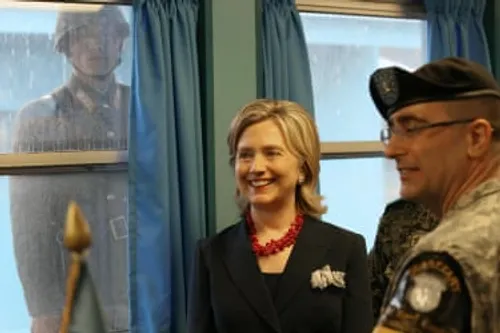
Bill Clinton won the 1992 presidential election and took office in January 1993.
Hillary Clinton consequently became First Lady of the United States.
Her approach to the position attracted considerable attention because she became directly involved in policy discussions.
One of her most prominent early assignments involved the Clinton administration’s attempt to overhaul America’s health-care system.
The proposed reform ultimately failed to pass Congress, becoming both an important chapter in Clinton’s career and a major political controversy of the period.
Her work as First Lady extended beyond health care.
The State Department credits her with working on issues involving children and families, adoption and foster care, teen pregnancy and children’s health coverage.
“Women’s Rights Are Human Rights”
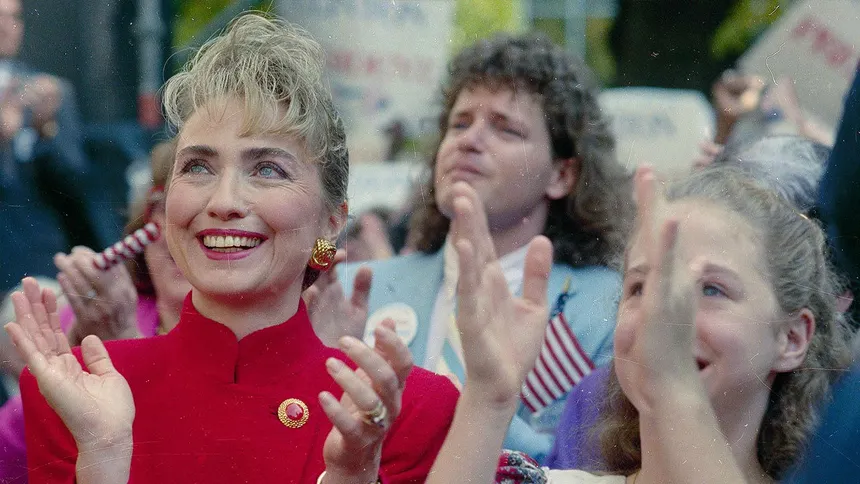
One of Clinton’s best-known moments as First Lady came in 1995.
At the United Nations Fourth World Conference on Women in Beijing, China, Clinton delivered a speech focused on the rights and treatment of women and girls.
Her declaration connecting women’s rights with universal human rights became closely associated with her international advocacy.
The State Department later described the Beijing address as an important part of her work promoting women’s rights internationally.
The speech remained associated with Clinton long after she left the White House.
From First Lady to U.S. Senator
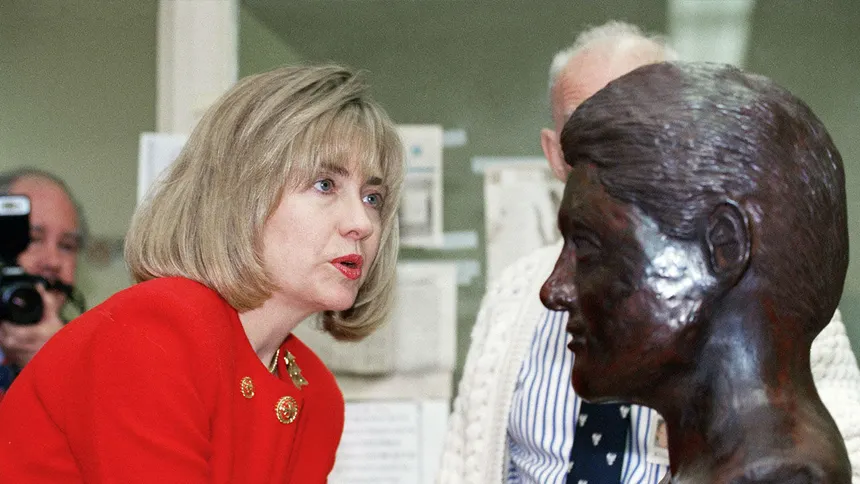
The end of Bill Clinton’s presidency did not mean the end of Hillary Clinton’s political career.
Instead, she pursued elected office herself.
In 2000, Clinton ran for a U.S. Senate seat representing New York.
She won.
Her election was historically significant: the Senate Historical Office records that on November 7, 2000, she became the first First Lady of the United States to be elected to the Senate.
She began serving in 2001 and remained a senator until 2009.
Her Senate tenure included the September 11 terrorist attacks, which had an enormous impact on New York.
The State Department’s biography notes her advocacy for rebuilding New York and addressing health concerns affecting first responders who worked at Ground Zero.
Clinton also served on several Senate committees, including the Armed Services Committee.
The Iraq War Vote
One of the most debated decisions of Clinton’s Senate career was her 2002 vote authorizing the use of military force against Iraq.
The Iraq War later became deeply controversial in American politics, and Clinton’s vote followed her into subsequent presidential campaigns.
She later said that voting for the authorization had been a mistake.
The episode illustrates an important aspect of Clinton’s long career: because she spent so many years in high-profile public positions, voters had an extensive record of decisions on which to judge her.
Her First Presidential Campaign
In 2007, Clinton entered the race for the 2008 Democratic presidential nomination.
For a period, she appeared to have a strong path toward becoming the nominee.
But another senator had emerged as a major competitor: Barack Obama of Illinois.
Their primary battle became long and closely watched.
Obama ultimately secured the Democratic nomination and went on to win the presidency in November 2008.
Clinton then supported the Obama-Biden ticket.
But the political relationship between Obama and Clinton was about to take another significant turn.
Secretary of State
President-elect Obama selected Clinton to become Secretary of State.
The Senate confirmed her in January 2009 by a vote of 94–2, according to the Senate Foreign Relations Committee.
On January 21, 2009, Hillary Rodham Clinton was sworn in as the 67th Secretary of State of the United States.
She served until February 1, 2013.
As America’s top diplomat, Clinton traveled extensively and dealt with issues involving Europe, Asia, the Middle East and other regions.
Her tenure coincided with major international events, including the Arab Spring, the war in Afghanistan, international negotiations over Iran, changing U.S. relations in Asia and the 2011 military intervention in Libya.
The policies of the Obama administration during this period remain subjects of substantial political and historical debate.
Benghazi
One of the most politically contentious events during Clinton’s tenure occurred on September 11, 2012, when a U.S. diplomatic facility and nearby CIA annex in Benghazi, Libya, were attacked.
Four Americans were killed, including U.S. Ambassador J. Christopher Stevens.
The attack led to investigations, congressional hearings and years of political argument over security preparations and the administration’s public response.
Clinton testified before Congress about Benghazi, including during a lengthy House hearing in 2015.
The subject became a major political issue as Clinton prepared for another presidential campaign.
The Email Controversy
Another controversy involved Clinton’s use of a private email server while serving as Secretary of State.
The issue became the subject of investigations and extensive media coverage during the 2016 presidential campaign.
In July 2016, FBI Director James Comey announced that the FBI was not recommending criminal charges, while criticizing Clinton and her colleagues as “extremely careless” in their handling of classified information.
The controversy nevertheless continued throughout the election campaign and remains part of the political debate surrounding Clinton’s record.
The 2016 Presidential Campaign
Clinton formally entered the 2016 presidential race in April 2015.
She competed against Vermont Senator Bernie Sanders and other Democrats for the party’s nomination.
Clinton eventually secured the Democratic nomination.
Her nomination represented a historic milestone: she became the first woman nominated for president by a major U.S. political party.
Her Republican opponent was businessman and television personality Donald Trump.
The campaign became one of the most contentious presidential elections in modern American history.
Election Night
On November 8, 2016, Americans voted.
Donald Trump won the Electoral College and therefore the presidency.
Clinton won more votes nationwide, receiving nearly 66 million votes compared with Trump’s nearly 63 million, but the American presidential election is determined by electoral votes rather than the national popular-vote total.
The result was a major political upset.
Clinton conceded the election.
In her concession speech the following day, she emphasized accepting the result while encouraging her supporters to remain involved in public life.
Life After the 2016 Election
After the election, Clinton did not return to elected office.
She continued writing, speaking and participating in political and civic organizations.
In 2017, she published What Happened, her account of the presidential campaign and her interpretation of the factors that contributed to the result.
She has also remained involved with initiatives associated with the Clinton family and has continued to comment publicly on American politics, women’s participation in public life, democracy and international affairs.
Her public role today is different from the period when she was a senator or cabinet secretary.
She is no longer a government official.
Yet because of her decades in national politics, her statements can still attract substantial media attention.
Hillary and Bill Clinton
Hillary Clinton’s life story is inseparable from her marriage to Bill Clinton, but their careers are not identical.
Their marriage has survived extraordinary public pressure.
Bill Clinton served as president from 1993 until 2001, including through the Monica Lewinsky scandal and his impeachment by the House of Representatives in 1998. The Senate acquitted him in 1999.
Hillary Clinton subsequently built an electoral and diplomatic career independent of her role as First Lady.
She became a senator while her husband was still president-electing his successor era, later competed for the presidency herself, and eventually became Secretary of State.
Their partnership has therefore occupied several different forms: husband and wife, political partners, former president and senator, and later former president and presidential nominee.
A Mother and Grandmother
Outside public office, Clinton is also a mother and grandmother.
Hillary and Bill Clinton’s only child, Chelsea, has built her own public career and has been involved with the Clinton Foundation.
Hillary Clinton has spoken in interviews and writings about becoming a grandmother and the importance of family life.
Those quieter aspects of her life contrast sharply with decades spent in presidential campaigns, congressional hearings, diplomatic negotiations and constant media coverage.
An Unusually Long Public Career
One reason Hillary Clinton remains such a recognizable figure is simply the extraordinary length of her national public career.
Americans saw her as First Lady beginning in 1993.
Then they saw her as a senator.
Then as a presidential candidate.
Then as Secretary of State.
Then as a presidential candidate again.
And afterward, as a former nominee, author and public speaker.
Very few people in modern American politics have occupied so many different prominent roles.
The State Department summarizes a career that included work as an attorney and advocate before her years as First Lady, senator and Secretary of State.
A Figure Who Inspires Strongly Different Views
Any accurate account of Hillary Clinton also has to acknowledge how politically polarizing she has been.
Supporters have emphasized her experience, advocacy for women and children, Senate service, diplomatic work and the historic significance of her 2016 presidential nomination.
Critics have focused on policy decisions, controversies surrounding the Clinton family, her Iraq War authorization vote, Libya and Benghazi, her handling of government email, and other aspects of her record.
Those disagreements have followed Clinton through much of her public career.
Rather than disappearing after the 2016 election, debates over her legacy became part of the larger argument over the political history of the Clinton era.
Her Place in American History
Whatever conclusions Americans draw about her politics, several parts of Clinton’s career are matters of historical record.
She was First Lady of the United States from 1993 to 2001.
She became the first former U.S. First Lady elected to the Senate.
She represented New York in the Senate from 2001 to 2009.
She served as the 67th Secretary of State from January 2009 until February 2013.
And in 2016, she became the first woman to head the presidential ticket of a major American political party.
Each of those milestones would constitute a significant political career on its own.
Together, they make Clinton one of the most prominent political figures of her generation.
More Than Three Decades in the National Spotlight
Hillary Clinton’s story is ultimately not a simple story of victory or defeat.
It contains both.
She experienced the White House as First Lady and later attempted twice to return as president.
She lost the Democratic nomination in 2008, became Secretary of State, returned to presidential politics and secured the Democratic nomination in 2016, only to lose the general election.
She has been praised and criticized, celebrated and investigated, supported passionately and opposed just as passionately.
Few American public figures have experienced the intensity of political attention for such an extended period.
A Lasting Chapter in American Political History
As Hillary Clinton approaches her 79th birthday in October 2026, her place in the history books is already substantial.
From a young law student at Yale to First Lady, senator, Secretary of State and presidential nominee, her career has crossed several eras of American politics.
Her supporters and critics will continue debating the consequences of her decisions.
History will continue examining the Clinton years, the Obama administration, the 2016 election and the political transformations that followed.
But the basic milestones are already established.
For more than three decades, Hillary Clinton has been present at some of the most consequential moments in American public life.
And whether remembered for her achievements, controversies, electoral campaigns, diplomatic record—or some combination of all of them—her story remains an important chapter in the history of American politics.
