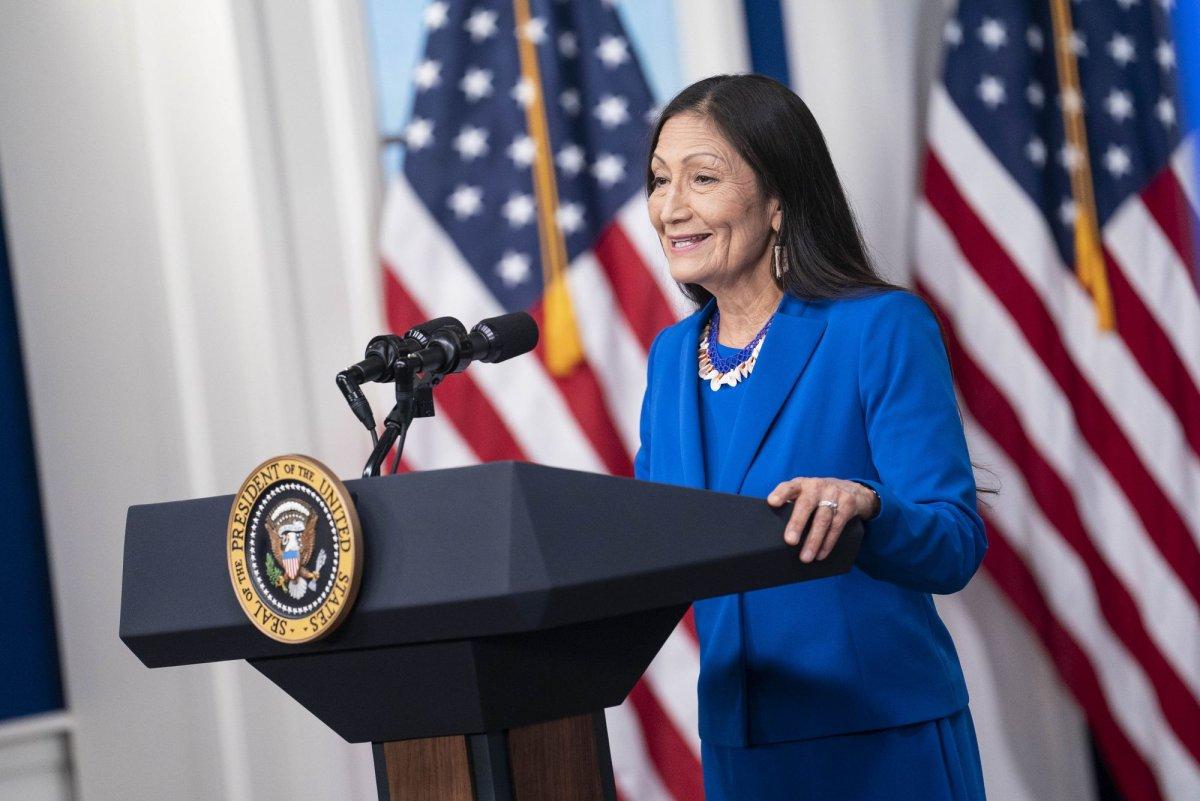


NEW MEXICO, November 4, 2026 — For generations, Native American women have fought to have their voices heard in the highest levels of American government. On Tuesday night, one woman accomplished something no Native American woman had ever done before.
Her name is Deb Haaland. She is 65 years old, a former single mother, a member of the Laguna Pueblo, and now the first Native American woman elected governor of a U.S. state.
But behind this historic victory is a remarkable personal journey filled with financial struggles, determination, motherhood, and years of public service.
Her story is about much more than winning an election. It is about overcoming obstacles that once seemed impossible.
A Historic Night That Changed American Politics
On November 3, 2026, voters in New Mexico elected Democrat Deb Haaland as their next governor, defeating Republican candidate Gregg Hull, the former mayor of Rio Rancho.
The election represented a historic milestone for Native American representation in American politics.
According to reported election results, Haaland received approximately 57% of the vote, compared with roughly 43% for Hull.
As supporters gathered at the Route 66 Casino Hotel in Albuquerque, the atmosphere turned celebratory when news of her victory arrived.
For Haaland, the moment represented the culmination of decades of personal challenges, political organizing, and public service.
She was not simply celebrating another election victory.
She was becoming part of American history.
From Financial Hardship to the Governor’s Office
Long before she became a nationally recognized political figure, Deb Haaland experienced the financial difficulties that many American families understand.
She raised her daughter as a single mother while navigating the challenges of making ends meet.
At different points in her life, she relied on public assistance programs that help families obtain food and medical care.
These experiences would later shape her political priorities and her understanding of the difficulties facing working families.
Rather than allowing financial hardship to define her future, Haaland continued pursuing education and opportunities to serve her community.
She attended law school in her 30s, demonstrating that major personal and professional achievements do not have to follow a conventional timeline.
Her journey was neither immediate nor easy.
Years before entering the national political spotlight, she worked in tribal administration, community organizing, and efforts to increase voter participation.
Each experience helped prepare her for the responsibilities that would eventually follow.
A Woman Who Had Already Broken Barriers
The 2026 election was not Haaland’s first historic achievement.
In 2018, she and Sharice Davids became the first two Native American women elected to the United States Congress.
For a country with centuries of Indigenous history, the achievement marked an important turning point.
Haaland represented New Mexico’s 1st Congressional District, bringing her experience in community advocacy and public service to Washington.
Her political career reached another milestone in 2021 when President Joe Biden appointed her Secretary of the Interior.
She became the first Native American to serve as a U.S. Cabinet secretary.
In that role, she oversaw a department responsible for federal public lands, natural resources, national parks, and important aspects of the federal government’s relationship with tribal nations.
Her appointment carried particular significance because Native American communities have historically experienced conflicts with federal authorities over land, resources, and sovereignty.
For many observers, seeing a Native American woman lead the Interior Department represented a powerful symbolic change.
But Haaland’s ambitions eventually brought her back to New Mexico.
Why She Decided to Run for Governor
After serving in Washington, Haaland sought the opportunity to lead her home state.
New Mexico faces many challenges familiar to families across the United States, including rising living costs, access to medical care, and concerns about children’s welfare.
During her campaign, Haaland emphasized making everyday life more affordable.
She also advocated expanding health care access and reforming the state’s child welfare system.
Her campaign highlighted the importance of supporting families who work hard but still struggle financially.
Her personal experiences as a single mother gave these issues additional meaning.
Rather than presenting herself only as a former federal official, she frequently spoke about understanding the pressures experienced by ordinary families.
That message became central to her campaign.
The Election That Made History
Haaland faced Republican Gregg Hull in the general election.
Hull, a businessman and former mayor of Rio Rancho, campaigned on his own vision for New Mexico’s future.
The candidates differed over public policy and the direction of state government.
But when voters went to the polls on November 3, Haaland emerged victorious.
Her election made her the first Native American woman chosen by voters to govern an American state.
She is set to succeed outgoing Democratic Governor Michelle Lujan Grisham, who could not seek another consecutive term because of term limits.
The victory also continued a remarkable political relationship between the two women.
Haaland previously succeeded Lujan Grisham in New Mexico’s 1st Congressional District after the latter ran successfully for governor in 2018.
Now Haaland is preparing to follow her into the governor’s office.
Why Her Victory Matters Beyond New Mexico
The importance of Haaland’s election extends beyond one state.
Native Americans have played a central role in the history of the United States, yet their representation in major political offices has often been limited.
For much of American history, Indigenous communities faced legal and practical barriers to full political participation.
Haaland’s election represents another step in the expansion of political opportunities for Native American communities.
It also highlights the growing role of women in American leadership.
Her achievement does not mean that every challenge facing Indigenous communities has been resolved.
However, it establishes a new precedent.
For the first time, a Native American woman has been elected to lead a state government.
That is a milestone future generations will be able to look back on.
The Personal Story Behind the Political Victory
Perhaps one of the most compelling aspects of Haaland’s story is the distance she has traveled.
She was once a single mother struggling financially.
She pursued higher education later than many traditional students.
She worked to register voters and organize communities.
She became a member of Congress.
She became a Cabinet secretary.
And now, at 65, she has been elected governor.
Her career challenges the assumption that success must happen early in life.
It also demonstrates how personal experiences can influence public leadership.
For people who have faced financial struggles, career setbacks, or uncertainty about their futures, her journey offers a reminder that circumstances can change.
Her story is not simply about political power.
It is also about persistence.
What Happens Next?
Winning an election is only the beginning of governing.
As New Mexico’s governor-elect, Haaland will face the responsibility of translating campaign promises into public policy.
Residents will be watching closely to see how her administration addresses affordability, health care, education, child welfare, and economic opportunities.
Supporters hope her experience in Congress and the federal government will help her lead effectively.
Critics and political opponents will evaluate whether her proposals deliver measurable improvements for the state.
Ultimately, the success of her governorship will depend not only on the historical significance of her election but also on the results she achieves for New Mexico residents.
A Historic Achievement at 65
At an age when many Americans are considering retirement, Deb Haaland is preparing to take on one of the most demanding responsibilities in state government.
Her path to this moment was shaped by motherhood, financial difficulties, education, community service, and political determination.
The significance of November 3, 2026, will remain part of American political history.
A woman who once struggled to support her family has now been elected to lead an entire state.
And for Native American women who hope to pursue leadership positions in the future, a barrier that stood for generations has finally been broken.
Deb Haaland’s story is a reminder that history is not only made by people who begin life with extraordinary advantages. Sometimes, it is made by people who refuse to stop moving forward, no matter how difficult the journey becomes.
