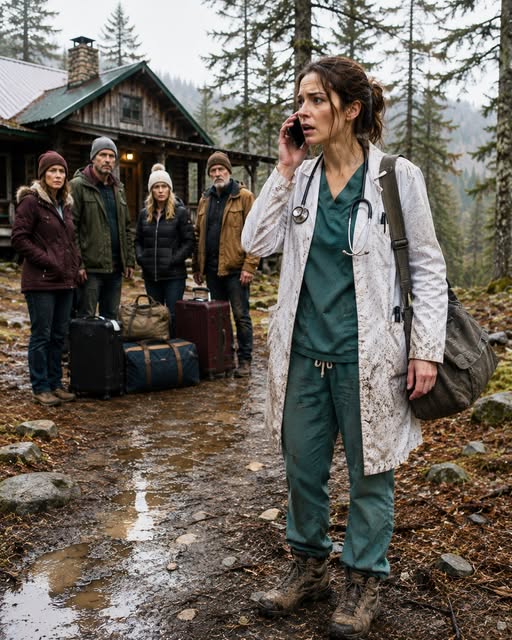
My family planned a twenty-person vacation at my lake house without asking me. Then my father called screaming on Friday morning when he realized I had changed the locks.
I was twelve hours into a double shift in the cardiac unit when my phone buzzed beneath a stack of patient charts.
At first, I assumed it was something ordinary. A pharmacy alert. A schedule change. Maybe another reminder from my bank.
Instead, it was a message from the family group chat.
My father had tagged me at 3:07 in the morning.
“We’re using Paige’s lake house this weekend. Twenty people. Friday through Tuesday. Everybody bring towels. Paige, get the house ready.”
I stood behind the nurses’ station at St. Catherine Medical Center in Richmond, Virginia, with antiseptic in my hair and stale coffee burning in the pot behind me.
A monitor from Room 14 flashed green against the glass.
Somewhere down the hall, a ventilator exhaled in its slow mechanical rhythm.
I read the message once.
Then again.
Then a third time.
My name is Paige Whitaker. I was thirty-six years old, single, exhausted, and the sole owner of a modest lake house on Smith Mountain Lake.
I had bought it after almost a decade of night shifts, double shifts, packed lunches, clearance scrubs, and driving a battered gray Toyota Corolla my family loved to joke about.
The house was mine.
Not “family property.”
Not “basically ours.”
Mine.
My name was the only one on the deed.
Every mortgage payment came from my bank account.
Every property tax bill.
Every roof repair.
Every broken screen.
Every can of paint.
I had bought that house because I wanted one place in the world where nobody could enter without asking me first.
Then my mother replied.
“Please stock the refrigerator, sweetheart. Aunt Melissa likes fresh flowers in the master bedroom. Don’t make this uncomfortable.”
Within minutes, reactions began appearing.
My cousin Rachel wrote:
“Finally. That house could use some real family energy.”
My younger brother, Dylan, added:
“About time you shared something.”
Someone asked whether the Wi-Fi password was still the same.
That was the message that made my stomach drop.
I had never given any of them the Wi-Fi password.
My charge nurse walked behind me carrying medication.
“You okay, Paige?”
“Yes.”
That was my first lie of the morning.
I opened the group chat and scrolled backward.
Nurses learn to notice what is missing.
The skipped medication.
The bruise someone hides beneath a sleeve.
The symptom nobody mentions.
Buried under messages from Memorial Day weekend, I found one from my mother.
“We’re at Paige’s lake house. She doesn’t know, so nobody post pictures yet.”
Thirty-eight people had seen it.
Not one person had told me.
I stood there in the blue hospital light and realized my family had been using my home while I was working.
My mother had a key I never gave her.
My father had walked through a door I never opened for him.
My relatives had slept in bedrooms I had created for my own peace.
And now they were planning a five-day vacation as if I were running a free resort.
I typed one word.
“No.”
No explanation.
No apology.
No smiley face.
Just no.
My mother responded immediately.
“You seriously think you can stop us? Paige, we’re your parents.”
My father followed.
“Don’t start drama at your age.”
Then came laughing emojis.
I put my phone facedown and returned to my patients.
Room 14 held a seventy-seven-year-old man recovering from bypass surgery.
That night, while I checked his blood pressure, he told me about his late wife.
Then, still half groggy from medication, he said:
“You know what gets heavy with age? Carrying people who would never carry you.”
I smiled politely.
Patients say strange things when they’re medicated.
But when my shift ended at 7:21 a.m., those words followed me all the way to the lake.
Fog hung over the road as I drove.
When I pulled into my driveway, I noticed fresh tire marks through the grass.
Two cigarette butts lay beside the side porch.
Under the welcome mat was a gas station receipt dated three weeks earlier.
Inside, the house smelled wrong.
Not dirty.
Used.
Someone’s floral perfume lingered in the living room.
My throw blanket had been folded differently.
A wine glass rested upside down beside the sink.
I don’t drink wine.
In the refrigerator was a jar of pickles with a sticky note.
“Save for next time.”
I sat on the kitchen floor wearing wrinkled navy scrubs and stared at that note.
Then I stood.
Washed my hands.
Opened my laptop.
And made three lists.
Legal.
Logistical.
Personal.
At the top, I wrote:
This house belongs to me, and they are about to understand what that means.
The first person I called was not my mother.
Old Paige would have called her.
Old Paige would have explained why she felt hurt.
Old Paige would have said:
“Can we please talk about boundaries?”
She would have believed that if she found exactly the right combination of words, people who had ignored her for years would suddenly become respectful.
That woman was tired.
So I called Rebecca Sloan.
Rebecca and I had gone to high school together. She now ran a civil law practice in Roanoke.
Two years earlier, after hearing one of my family stories at a charity event, she had handed me her card.
“When they finally push you too far,” she said, “call me before you call them.”
At 8:16 that morning, I did.
I told her everything like I was giving shift report.
The group chat.
Memorial Day.
The key.
The Wi-Fi.
The cigarette butts.
The planned twenty-person vacation.
The fresh flowers requested for the master bedroom.
Rebecca listened quietly.
Then she said:
“Paige, answer one question before I tell you what to do.”
“Okay.”
“Do you want to scare them, or do you want this to end?”
I looked through the windows toward the gray water.
“I want it over.”
“Then don’t fight with them. Don’t threaten anybody. And don’t block them.”
“Why?”
“Because entitled people are extremely generous with evidence when they think you won’t stop them.”
By noon, I was sitting in Rebecca’s office with the deed, mortgage papers, screenshots, insurance statements, and tax records.
She paused at my mother’s Memorial Day message.
“We’re at Paige’s lake house. She doesn’t know.”
Rebecca looked up.
“This is useful.”
“It feels humiliating.”
“It can be both.”
She told me to send formal notices by registered mail to my parents, my brother, and every adult who had participated in planning the weekend.
The letters would state that I was sole owner.
Nobody had permission to enter, occupy, lend, advertise, or invite guests to the property.
Any attempt to enter after notice would be treated as trespass.
Then I would change the locks.
Upgrade the alarm.
Install cameras.
Remove my parents from the lake association’s emergency contact list.
And say nothing emotionally.
“Let paper speak,” Rebecca said. “Paper doesn’t get exhausted. Paper doesn’t cry. And paper can’t be guilted by its mother.”
That afternoon I stopped at a hardware store and bought smart locks, an alarm sensor, outdoor lights, and cameras.
The cashier glanced at my cart.
“Security issue?”
“Family.”
He nodded like that was enough explanation.
By early evening, a locksmith named Walter Briggs was drilling out the old locks.
He was in his late fifties, quiet, with silver hair and careful hands.
As he worked, he said:
“People think locks are for keeping strangers out.”
“What else are they for?”
“Reminding relatives they still need permission.”
I almost laughed.
When he finished, he handed me a ring containing four new keys.
“Only you?”
“Yes.”
“No hidden spare?”
“No.”
“No mother who somehow has one?”
I looked at him.
He smiled.
“I’ve been doing this twenty-eight years.”
That night, with the new alarm blinking beside the door, I opened old bank statements.
I found $3,100 I had transferred to Dylan when his truck was about to be repossessed.
$4,800 I had given my parents during the pandemic.
$1,500 for my mother’s sixtieth birthday celebration.
Smaller transfers.
Utility bills.
Emergency hotel rooms.
Car repairs.
Medical copays.
The total was $28,460.
Actual money.
Not emotional accounting.
For years, I had thought I was helping.
That night, I understood I had also been training them.
Every yes taught them another yes would come.
Every insult I ignored taught them there would be no consequence.
Every emergency became mine because I kept solving it.
At 10:04 p.m., my mother texted me privately.
“Your father says you’re overreacting. I told him you’re tired. Call tomorrow and we’ll straighten this out.”
I took a screenshot.
Then turned off my phone.
The next morning, my cousin Hannah sent me screenshots from a second family group chat my mother had created.
Hannah was twenty, attending Virginia Tech, and apparently still possessed something rare in our family: a conscience.
Her message said:
“Paige, I don’t think they care that you said no. You should see this.”
The new chat was called Lake Week Crew.
My mother had created a spreadsheet.
Tabs included:
Meals.
Beds.
Activities.
Pickup Schedule.
Paige Tasks.
I opened that tab.
Stock fridge for twenty.
Wash sheets.
Fuel boat.
Buy almond milk for Chloe.
Pick up Aunt Melissa and Uncle George from Richmond airport.
Fresh flowers in master bedroom.
Paige is not to use master bedroom or master bathroom during visit.
I read the last sentence four times.
I was being assigned restrictions inside my own house.
I forwarded everything to Rebecca.
Her answer:
“Excellent evidence. Say nothing.”
So I said nothing.
Instead, I bought groceries for myself.
Eggs.
Chicken.
Coffee.
Blueberries.
A frozen pizza.
And a chocolate cake from a bakery I liked.
I put the cake in the freezer and promised myself that whatever happened Friday, I would eat some.
By Wednesday afternoon, my mother had left six voicemails.
The first was gentle.
“Sweetheart, please call. We just need to coordinate groceries.”
The second was irritated.
“Ignoring your mother is immature.”
The third was sharper.
“Your father is furious, and I’m trying to protect you from him.”
The fourth was the one Rebecca told me to save in multiple places.
“Paige, listen carefully. This weekend is happening whether you like it or not. Your father has a spare key. We will be there Friday. If that house isn’t ready, you’re going to embarrass us in front of the entire family. We gave you everything. That house exists because of the discipline we taught you. Don’t test me.”
Rebecca replied:
“Perfect. Stay silent.”
Silence made them louder.
By Thursday evening, Hannah’s screenshots showed the whole plan beginning to fracture.
Some relatives canceled.
Others started asking questions.
My brother Dylan vanished from the chat for several hours.
Then he called me.
I ignored the first two calls.
On the third, I answered.
“What?”
“Paige, what are you doing?”
“Making dinner.”
“You know what I mean.”
“No, Dylan. Explain it.”
“Mom is losing her mind. Dad is furious. Brooke already invited friends to the lake.”
Brooke was Dylan’s girlfriend.
“That sounds like their problem.”
“You always do this.”
“Do what?”
“Act like you’re better than everybody because you’re a nurse and own a house.”
I stirred pasta.
“I have a job because I work. I own the house because I bought it.”
“Mom and Dad helped you become successful.”
“They cosigned one apartment lease when I was twenty-three.”
“That still counts.”
“As ownership of my house thirteen years later?”
He was quiet.
Then his tone changed.
“Paige, I need the weekend.”
Something in his voice made me stop stirring.
“For what?”
“I told some people they could use the house.”
“Family?”
Silence.
“Dylan.”
“They’re connected to money I owe.”
My stomach tightened.
“How much?”
“Seventeen thousand.”
I turned off the stove.
“Who?”
“Please don’t make me explain.”
“Are they coming Friday?”
“Probably.”
There it was.
This was no longer just a family vacation.
My brother had offered my property to people connected to a debt.
And my parents were helping him hide it.
I said:
“Listen carefully. Those people are not coming into my house. Neither are you. Neither are Mom and Dad.”
“Paige, please.”
“I love you, Dylan. I have loved you since you were the little kid I made cereal for because Mom forgot groceries. But I am not your bank. I am not your protection. And my house is not something you get to gamble when you’re scared.”
He exploded.
He called me selfish.
Cold.
Lonely.
He said I would die alone inside that house.
I let him finish.
Then I said:
“This conversation is being documented.”
He stopped.
I had not secretly recorded him.
But I wanted him to understand this was no longer casual family chaos.
“Good night.”
I hung up.
By midnight, the guest list was collapsing.
Aunt Melissa canceled.
Uncle George canceled.
Three cousins suddenly remembered obligations.
Only a handful remained.
At 11:41 p.m., my father posted:
“Trip is still happening. Noon tomorrow. End of discussion.”
Friday morning was almost offensively beautiful.
The lake was smooth.
The sky clear.
Sunlight stretched across the kitchen floor.
The new locks were installed.
The cameras were running.
The notices had been mailed.
Rebecca was available by phone.
I sat on the screened porch in sweatpants, drinking coffee.
At 11:48, a black SUV with Ohio plates entered my driveway.
Two men stepped out.
Neither had luggage.
One tried the front door.
Locked.
He rang the bell.
I didn’t answer.
He called someone.
Twenty seconds later, Dylan’s name appeared on my phone.
I ignored it.
The men returned to the SUV and parked it sideways near the driveway entrance.
Blocking access.
That was enough.
I called the county sheriff’s non-emergency number.
At 11:59, my parents’ Buick pulled up behind the SUV.
My father climbed out first.
My mother followed with a suitcase, tote bag, and purse.
She marched up the walkway and inserted her old key.
Nothing.
Again.
Nothing.
Then she pounded on the door.
“Paige! Open up! I know you’re inside!”
My father joined her.
He hit the door with his fist.
“What did you do to the house?”
That sentence told me everything.
Not:
“What did we do?”
Not:
“Can we talk?”
What did you do?
As though locking my own house was an attack on them.
I pressed the intercom button.
“Mom. Dad. You do not have permission to enter. The locks are changed. Cameras are recording. The alarm is active. Please leave.”
My mother stared at the camera.
“You can’t do this.”
“I already did.”
“Open this door!”
“No.”
My father leaned toward the camera.
“We need to discuss this as adults.”
“We are. I’m an adult telling you that you cannot enter my property.”
My mother shouted:
“I gave birth to you!”
I looked at her through the screen.
“And I bought this house.”
A deputy arrived at 12:14.
Deputy Collins was a woman in her fifties with gray hair threaded through a dark ponytail and the expression of someone who had seen too many families confuse volume with law.
She spoke first to the men in the SUV.
Within minutes, they left.
Then she approached my parents.
I stepped outside and closed the door behind me.
She asked:
“Are you the property owner?”
“Yes. Paige Whitaker. Sole owner.”
She looked at my parents.
“Are either of you on the deed, mortgage, lease, or any legal occupancy agreement?”
My mother said:
“We’re her parents.”
Deputy Collins replied:
“That wasn’t my question.”
My mother’s face reddened.
“No.”
“Then she has asked you to leave. You need to leave.”
My father tried again.
“Our son is coming.”
I said:
“Dylan is not welcome either.”
The deputy nodded.
“Then I recommend telling him before he wastes the drive.”
My mother looked at me.
Really looked.
And for the first time, she seemed to understand that crying wouldn’t unlock the door.
My father’s anger wouldn’t unlock it.
The word family wouldn’t unlock it.
Only my permission would.
They left at 12:31.
My father glanced back once.
His expression wasn’t hatred.
It was recognition.
He had finally understood that I had never been powerless.
I had simply spent years choosing not to fight.
I went inside.
Locked the door.
Took the chocolate cake out of the freezer.
And ate a slice at 12:44 in the afternoon.
It was still partly frozen.
It was also the best cake I had ever tasted.
By Friday night, the family group chat was silent.
Saturday morning, my mother deleted it.
Hannah sent me a screenshot of the blank chat.
“Digital cemetery,” she wrote.
I laughed.
A real laugh.
The silence lasted less than a day.
My mother created a new group called Family Support.
I wasn’t invited.
Hannah was.
According to my mother’s version, I had suffered some kind of breakdown from working too many nights.
I had humiliated my parents.
I had locked them out of a house they had “helped me buy.”
Aunt Melissa wrote:
“Something has always been strange about Paige. I never wanted to say it.”
This time, the old pain barely came.
Not because it wasn’t cruel.
Because I had stopped treating every cruel thing somebody said about me like an emergency I had to fix.
Then another chat appeared.
This one was created by Uncle George.
He added me, Hannah, my cousin Erin, and several relatives.
His opening message said:
“This group is for people who care about Paige. If you’re here to justify what happened, leave.”
Nobody left.
That night, Erin sent me a private message.
“Paige, I owe you an apology.”
She explained that years earlier, my mother had told her I had insulted our grandmother shortly before she died.
I had never said any such thing.
Then Erin told me there were other stories.
My mother had spent years quietly shaping how the family saw me.
She told people I hated children.
That I thought cousins were beneath me.
That I was judgmental.
That I disliked family gatherings.
That I was unstable when I worked nights.
Every time I became close to someone, a rumor appeared.
For years, I thought the distance between me and the family was natural.
Work.
Schedules.
Personality.
It wasn’t.
My mother had built walls around me and then told everyone I wanted privacy.
That hurt more than the house.
But it also explained things I had spent years blaming myself for.
Rebecca sent the legal response the following Monday.
My parents had no ownership rights.
No informal agreement existed.
Any future unauthorized entry would be treated as trespass.
Dylan hired an attorney who claimed my parents had an “informal family-use agreement” created through decades of parental support.
Rebecca laughed when she read it aloud.
“That is nonsense in a blazer.”
“Should we sue?”
“We could.”
I looked toward the water.
“No.”
“You sure?”
“I don’t want two years of court. I want my house. My time. My peace.”
Rebecca smiled.
“That counts as winning.”
Six weeks passed before my father tried again.
He called the cardiac unit at one in the morning and told the unit clerk he was having chest pain and needed to speak to me before going to the emergency room.
The clerk found me administering medication.
“Paige, your dad says it’s his heart.”
For one second, I became a frightened daughter.
Then I became a nurse.
I took the phone.
“Dad, if you are having chest pain, call 911.”
“I just wanted to hear your voice in case something happens.”
“Call 911.”
“Your mother and I have been thinking—”
There it was.
Not an emergency.
A strategy.
“If you call my workplace again pretending to have a medical emergency to force contact, I will report it to hospital security.”
“Paige—”
“Good night.”
I hung up.
My hands were steady.
That was enough.
My mother tried in August.
She arrived at the hospital lobby carrying flowers and told the volunteer she was there for my birthday.
My birthday was in December.
My friend and charge nurse, Monica Hayes, called me at home.
“Your mother is downstairs with roses saying it’s your birthday.”
“It isn’t.”
“I know. What do you want?”
“Tell her I’m unavailable. If she refuses to leave, call security.”
“You sure?”
“Yes.”
Later, Monica told me my mother cried loudly and asked the security guard whether he had children.
She said:
“Would you allow your daughter to treat you like this?”
The guard reportedly replied:
“I hope my daughter sets boundaries if I ever make her need to.”
I sent him a thank-you note.
The flowers stayed at the nurses’ station until they died.
By September, I had adopted a rescue dog named Pepper.
Forty-five pounds.
One floppy ear.
Deep suspicion of anyone approaching the front porch.
She loved the lake immediately.
The first time I brought her there, she walked through every room sniffing corners like she was checking for unauthorized occupants.
I understood her completely.
I also started therapy.
My therapist, Dr. Laura Bennett, listened while I described the lake house situation in the detached, factual tone I used at work.
When I finished, she said:
“That tells me what happened. Now tell me why it took you thirty-six years to believe you were allowed to lock a door.”
I sat silent.
Finally, I said:
“I didn’t know I was allowed to.”
So we went backward.
To childhood.
To my mother forgetting groceries.
To Dylan being seven and me making his dinner.
To my father disappearing into the garage every weekend.
To me signing school forms because my mother was “too overwhelmed.”
To neighbors asking if everything was okay.
To me saying yes because children learn quickly which truths create more problems.
I had been taking care of people so long that I confused exhaustion with love.
Dr. Bennett taught me something simple.
Boundaries are not walls.
They are doors.
And the important part is deciding who controls the lock.
In October, Dylan called from an unfamiliar number.
I answered because I thought it was the pharmacy.
“Paige, don’t hang up.”
I almost did.
“I’m not calling for money.”
That made me stay.
He told me he had entered a court-supervised debt program.
He said:
“I owe you an apology. For the house. For those men. For the things I said. For letting Mom and Dad use you like you existed to clean up whatever we broke.”
I stayed quiet.
“I know saying sorry doesn’t repair it,” he continued. “I just wanted to say it without asking you for something afterward.”
“Thank you.”
“I mean it.”
“I believe you mean it today. I’m still not ready to have a relationship with you.”
“I understand.”
“Maybe later.”
“Maybe.”
Before we hung up, he said:
“Mom tells people you abandoned us. I told her that wasn’t true.”
I closed my eyes.
“What did you tell her?”
“That you loved us better than we deserved, and we used it up.”
That was when I cried.
Not because everything was fixed.
Because somebody finally said the truth out loud.
Early December brought another surprise.
A letter arrived from an attorney’s office.
It had been written years earlier by my grandmother, Evelyn Whitaker, before she died.
Her handwriting covered three pages.
One paragraph stopped me.
“Paige, I watched you become useful before anyone allowed you to become happy. I watched this family benefit from your patience, including me. I should have told you sooner that being dependable does not mean surrendering your life. You are allowed to disappoint people who were counting on your obedience. You are allowed to have a home nobody else controls. Do not wait until you are old to become free.”
I read it four times.
Then I placed it in the drawer beside my deed.
One paper said the house belonged to me.
The other reminded me my life did too.
Two weeks before Christmas, my mother appeared at the lake house.
Alone.
No suitcase.
No flowers.
No relatives.
She stood on the porch wearing a gray coat.
I watched her through the camera for nearly a minute.
Then I opened the door.
I did not invite her inside.
“Can we talk?” she asked.
“On the porch.”
She nodded.
That was new.
We sat facing the lake.
Pepper sat between my feet.
My mother looked older.
Not helpless.
Just older in the way people look after months of being forced to meet themselves.
“I started therapy,” she said.
I waited.
“Dylan refused to come home for Christmas unless I did.”
Still I said nothing.
Then she looked at her hands.
“I have not been a good mother to you.”
I had imagined hearing those words most of my life.
They didn’t heal anything.
But they mattered.
She continued.
“I used you. When Dylan needed things, I made you responsible. When our house was chaotic, I used you to make us look normal. When you became successful, I took credit. When you bought this place, I thought I deserved it because I was your mother.”
Her eyes filled.
“I understand now how ugly that sounds.”
I let her cry.
For once, I didn’t rush to comfort her.
“I’m not asking to come inside,” she said. “I’m not asking for everything to go back to normal. I’m asking whether someday you might have coffee with me. Public place. Whatever limits you need.”
I answered carefully.
“Your apology doesn’t erase what happened.”
“I know.”
“You do not come here unless I invite you.”
“I understand.”
“You do not call my workplace.”
“I won’t.”
“You do not use relatives to reach me.”
“Okay.”
“You don’t ask about my finances, my schedule, or this house.”
She nodded.
“If we have coffee, it will be once. Thirty minutes. Public.”
“Okay.”
“I’ll think about it.”
Her face softened with relief.
The old Paige would have given her more.
A hug.
A key.
Forgiveness she had not yet earned.
I did not.
That evening, my boyfriend Aaron Mitchell came over with groceries and a toy for Pepper.
Aaron worked as a respiratory therapist in the hospital system.
He was forty-one, divorced, calm, and kind in a way that never felt like performance.
When I told him about my mother, he asked:
“How do you feel?”
I thought for a while.
“Like I didn’t abandon myself.”
He smiled.
“That sounds a lot like peace.”
It did.
Not happiness exactly.
But peace.
It is June now.
I am sitting on the screened porch of the lake house.
The house is still mine.
The locks are still changed.
The alarm still glows red at night.
The Wi-Fi password is something no relative could guess.
My father and I remain estranged.
That word used to frighten me.
Now it simply means distance I chose instead of pain I was assigned.
My mother and I meet for coffee once a month at a diner halfway between Richmond and the lake.
Thirty minutes.
Public table.
Separate checks.
She is trying.
I notice.
I do not confuse effort with automatic access.
Dylan is still in his program.
He calls occasionally.
Sometimes I answer.
He hasn’t asked for money once.
Hannah graduated in May.
I attended with Uncle George and Erin.
Afterward, my mother stood several feet away and did not demand a family photograph.
I noticed that too.
Again, I did not pretend everything was healed simply because one boundary was respected.
Aaron keeps a toothbrush at the lake house.
He does not have a key.
He has never asked for one.
One evening, I told him how much that mattered.
He looked surprised.
“A key should be offered,” he said. “Not hunted.”
That sentence almost undid me.
Sometimes I think back to that Friday.
My mother pounding on the door.
My father asking what I had done to the house.
The strangers in the SUV.
Deputy Collins on my porch.
The frozen chocolate cake beneath my fork.
At the time, I thought that day was the ending.
It wasn’t.
It was the beginning.
That is what people rarely tell you about saying no.
The first no feels like destruction because everything built on your silence begins shaking.
People panic.
They call you selfish.
Cruel.
Ungrateful.
They say:
“You’ve changed.”
And they’re right.
You have changed.
You are no longer the unlocked door.
The first no is terrifying.
The second still hurts.
After enough of them, you begin recognizing your own voice.
Eventually, you wonder how you ever confused obedience with love.
I still work nights.
I still hold frightened patients’ hands.
I still drive an old Toyota even though Aaron keeps sending me listings for cars with heated seats.
And when I have something worth celebrating, I still buy chocolate cake.
Last week I ate a slice at three in the afternoon while Pepper slept beneath the kitchen table.
A heron stood motionless at the edge of the dock.
The lake was bright.
My phone was quiet.
I looked at the drawer where I keep my deed and my grandmother’s letter.
Two pieces of paper.
The house was mine.
The life was mine.
The no was mine.
And for the first time in my life, nobody else had a key.
