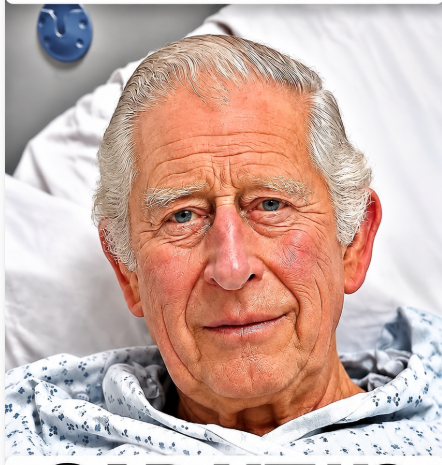
On July 8, the monarch welcomed French President Emmanuel Macron and his wife, Brigitte, to Windsor. The 76-year-old was joined by his wife, Queen Camilla, as Prince William and his wife Kate Middleton led the ceremonial start of the French state visit.
While the monarch was all smiles as he greeted the French president and his first lady, many royal watchers observed a visible bloodshot appearance in his right eye. Charles is still completing treatment for an undisclosed form of cancer.
KING CHARLES, PRINCE HARRY AT POINT OF ‘NO TURNING BACK’ AS MONARCH REFUSES RECONCILIATION: EXPERT
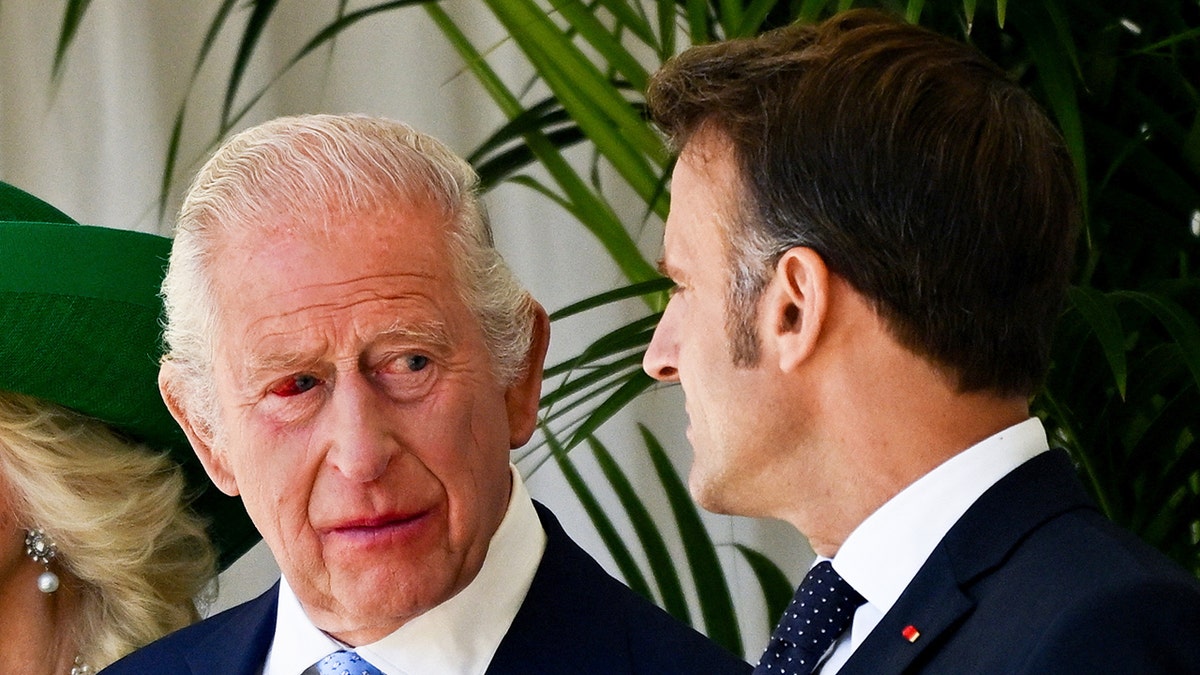
French President Emmanuel Macron speaks to King Charles III, whose eye is red, during a welcome ceremony at Windsor Castle as part of Macron’s state visit to the United Kingdom on July 8, 2025, in Windsor, England. (Dylan Martinez – WPA Pool/Getty Images)
A palace source told Fox News Digital that Charles experienced a burst blood vessel in one eye. They noted it’s unrelated to any other health condition, including his cancer treatment. Fox News Digital reached out to Buckingham Palace for comment.
Charles was diagnosed with cancer in 2024.
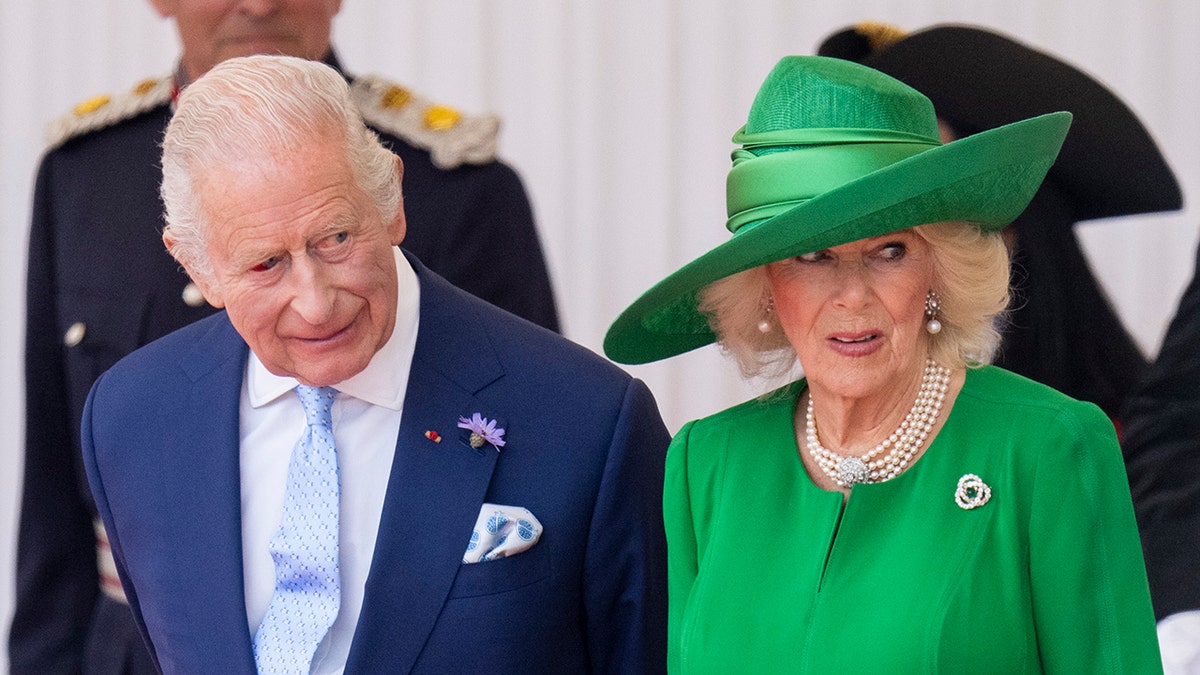
Queen Camilla and King Charles III during the formal welcome at the Royal Dais on July 8, 2025, in Windsor, England. (Mark Cuthbert/UK Press via Getty Images)
A broken blood vessel, or “subconjunctival hemorrhage,” is typically harmless and is similar to having a bruise on your skin, Mayo Clinic reported. According to the outlet, it can be caused by a “strong sneeze or cough” and, while it looks alarming, it clears up on its own within one to two weeks.

Charles didn’t appear to be in any kind of discomfort. Instead, he carried out his royal duties as planned, hosting President and first lady Macron at Windsor Castle with full ceremonial honors, People magazine reported. According to the outlet, a dazzling state banquet is scheduled to take place this evening in St. George’s Hall, with both leaders expected to deliver speeches.
Sources previously told People that the king has been determined to continue public-facing duties as he addresses his health.
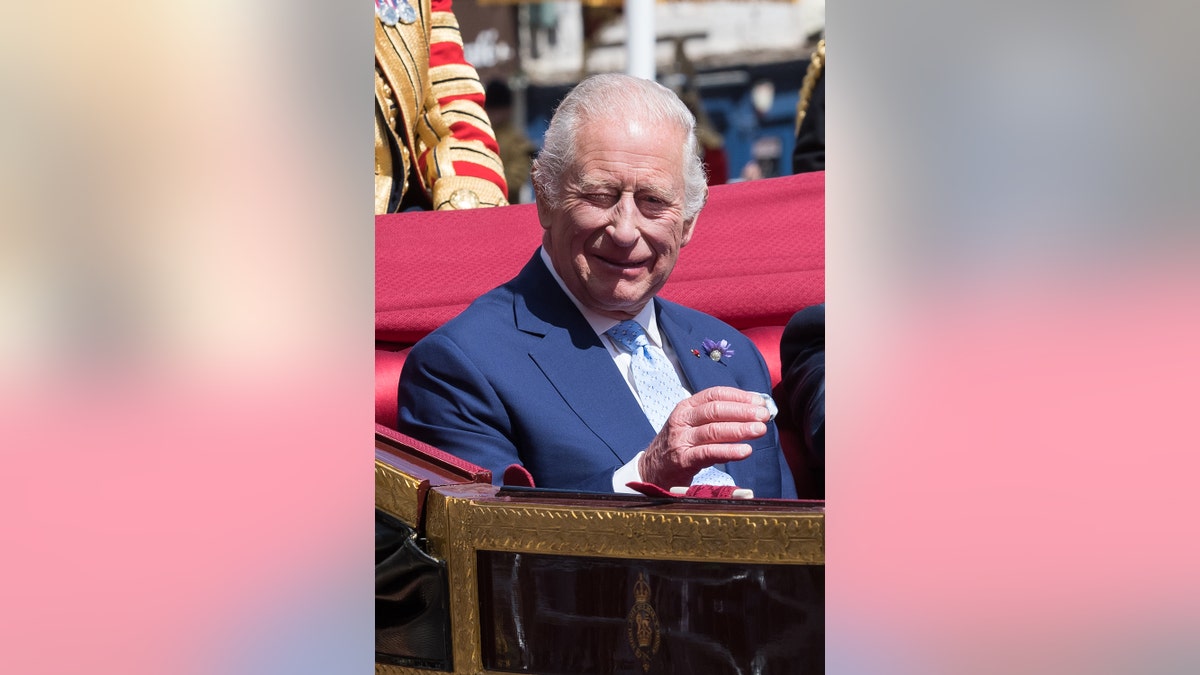
King Charles III travels in a carriage towards Windsor Castle on July 8, 2025. (Wiktor Szymanowicz/Future Publishing via Getty Images)
“The thing you learn about this illness is that you just manage it, and that’s what he does,” a royal aide recently said about Charles’s ongoing treatment.
“Medical science has made incredible advances, and I genuinely see no difference in him,” they shared. “As long as you just do what the doctors say, just live your life as normal as possible. That’s exactly what he is doing.”
Charles wasn’t the only one in good spirits.
Queen Camilla appeared equally cheerful as she stood beside her husband during the formal welcome ceremony. Dressed elegantly for the occasion, she joined the king in greeting President Macron and Brigitte Macron, who had traveled to the United Kingdom for the important diplomatic visit.
The arrival of the French president marked a significant moment in the relationship between Britain and France. The state visit included military honors, a ceremonial procession, and a series of official engagements designed to celebrate the longstanding ties between the two nations.
Prince William and Kate Middleton also played a prominent role in the welcome ceremony. Their presence alongside the king and queen highlighted the importance of the occasion for the royal family.
Kate, who had faced her own health challenges in recent years, appeared composed and elegant as she participated in the official proceedings. Royal watchers closely followed her interactions with the French presidential couple, as well as her appearance alongside her husband.
The visit also offered Charles an opportunity to demonstrate his commitment to his constitutional responsibilities. Despite his ongoing cancer treatment, the monarch has continued to attend important events and maintain a public schedule, with adjustments made when necessary based on medical advice.
For many royal observers, the king’s appearance at Windsor served as another reminder of his determination to remain active in public life while managing his health privately.
However, the focus on his red eye quickly spread across social media, with some viewers expressing concern about his well-being. The palace’s explanation helped clarify that the visible irritation was caused by a burst blood vessel and was not connected to his cancer treatment, according to the source cited by Fox News Digital.
Medical experts have previously explained that subconjunctival hemorrhages can occur without warning and may look more serious than they actually are. Nevertheless, any unusual eye symptoms should be evaluated by a medical professional when necessary.
As the formal welcome ceremony continued, Charles appeared relaxed and engaged. He exchanged smiles with President Macron and took part in the carefully choreographed proceedings that accompanied the state visit.
Later that evening, the attention shifted to the state banquet at Windsor Castle. The event was expected to bring together senior members of the royal family, government officials, and distinguished guests from both Britain and France.
State banquets are among the most formal occasions in the royal calendar, combining diplomatic discussions with elaborate traditions, including formal speeches, carefully planned menus, and ceremonial protocol.
For Charles, the occasion represented more than a celebration of international relations. It was also another opportunity to carry out the duties he has continued to prioritize during a challenging period in his personal life.
Although the details of his cancer treatment remain private, the king has repeatedly maintained a visible presence at important royal engagements.
His decision to continue working has drawn attention from royal commentators, who have discussed how the monarch has adapted his schedule while following medical advice.
Meanwhile, the royal family’s appearance at Windsor offered a moment of unity as they welcomed an important international guest.
As the evening progressed, royal watchers continued to follow the king’s activities, hoping that his ongoing treatment would proceed successfully and that he would be able to maintain his public responsibilities in the months ahead.
King Charles’ Red Eye Draws Attention During French State Visit as Monarch Continues Cancer Treatment
King Charles III was at the center of international attention as he welcomed French President Emmanuel Macron and his wife, Brigitte Macron, to Windsor on July 8, 2025, for a major state visit celebrating the relationship between Britain and France.
The King, then 76, was joined by Queen Camilla, while Prince William and Catherine, Princess of Wales, played prominent roles in the ceremonial welcome.
It was an occasion filled with royal tradition, military pageantry and diplomatic symbolism. Yet as photographs from Windsor began circulating around the world, another detail quickly caught the attention of royal watchers: the noticeably red appearance of King Charles’ right eye.
Because Charles had publicly announced his cancer diagnosis the previous year and was continuing treatment, the unusual appearance immediately prompted questions about his health.
However, the explanation reported at the time was far less alarming.
According to a palace source cited by Fox News Digital, the King had experienced a burst blood vessel in his eye. The source said the condition was unrelated to his cancer or cancer treatment.
A Visible Red Eye — But No Sign of Discomfort
Close-up photographs taken during the welcome ceremony showed a bright red patch in the white of Charles’ right eye.
Despite its striking appearance, the King did not appear visibly uncomfortable. He smiled, spoke with President Macron and participated in the formal proceedings as planned.
A burst blood vessel on the surface of the eye is commonly known as a subconjunctival hemorrhage.
The condition can look dramatic because blood becomes trapped beneath the clear surface covering the white part of the eye. In many cases, however, it is harmless and disappears without treatment.
It can sometimes occur after something as ordinary as coughing or sneezing, and people may not even realize it has happened until they look in a mirror.
For observers already closely following Charles’ health, however, the timing naturally generated additional attention.
The King had revealed in February 2024 that he had been diagnosed with cancer after undergoing treatment for an enlarged prostate. Buckingham Palace did not publicly disclose the specific type of cancer.
Since then, Charles’ health and public schedule have remained subjects of intense interest.
King Charles Carries On With His Duties
Whatever concern his eye initially generated, Charles showed little outward indication that it was affecting him.
He continued with the elaborate Windsor welcome, appearing alongside Queen Camilla as the French presidential couple received full ceremonial honors.
The state visit represented one of the most significant diplomatic occasions on the royal calendar.
President Macron and Brigitte Macron were welcomed with the traditions associated with a state visit, including military honors, a carriage procession and formal meetings.
Charles appeared engaged throughout the proceedings, exchanging smiles and conversation with his guests.
His appearance reflected a pattern that had become increasingly familiar since his cancer diagnosis: maintaining a public presence while receiving medical treatment and adjusting his schedule when necessary.
Rather than withdrawing completely from royal life, the King gradually resumed more public-facing responsibilities following the announcement of his illness.
The approach has allowed him to continue fulfilling many of the constitutional and ceremonial responsibilities of the monarchy while keeping the details of his medical treatment largely private.
Managing Cancer While Remaining in Public Life
Charles’ cancer diagnosis represented one of the most significant personal challenges of his reign.
He became King following the death of Queen Elizabeth II in September 2022 and was formally crowned alongside Queen Camilla at Westminster Abbey in May 2023.
Less than a year after the coronation, Buckingham Palace announced that cancer had been discovered following the King’s treatment for an unrelated prostate condition.
The palace emphasized at the time that Charles remained positive about his treatment.
Although he temporarily reduced his public-facing engagements, he continued carrying out state business and later returned to a broader schedule of appearances.
People magazine previously quoted a royal aide describing the King’s approach to living with the illness.
“The thing you learn about this illness is that you just manage it, and that’s what he does,” the aide said.
The aide also pointed to advances in medicine and said Charles was attempting to live as normally as possible while following his doctors’ instructions.
That attitude was evident at Windsor.
Rather than allowing the visible redness in his eye to overshadow the occasion, Charles proceeded with the day’s events.
Queen Camilla Stands Beside the King
Queen Camilla was alongside her husband throughout the formal welcome.
She appeared cheerful as she greeted Emmanuel and Brigitte Macron and participated in the carefully choreographed royal ceremonies.
Camilla’s presence has been particularly important during the period surrounding Charles’ cancer treatment.
While the royal household has maintained the King’s medical privacy, the Queen has continued with her own engagements while frequently accompanying Charles at major national and international events.
At Windsor, the couple appeared relaxed together as they welcomed their French guests.
Their participation helped turn the occasion back toward its intended focus: the diplomatic relationship between the United Kingdom and France.
William and Catherine Take Prominent Roles
Prince William and Catherine, Princess of Wales, were also central figures in the welcome.
Their involvement carried additional significance because Catherine had faced her own major health challenges after announcing in 2024 that she had undergone treatment for cancer.
Her return to prominent royal occasions therefore attracted considerable attention of its own.
At Windsor, William and Catherine helped welcome the French presidential couple before joining the King and Queen for the formal proceedings.
Catherine appeared composed as she participated in the ceremony alongside her husband.
The presence of both generations of the Royal Family created a striking image.
Charles and Camilla represented the reigning monarch and Queen, while William and Catherine represented the next generation of the monarchy.
Against the backdrop of Windsor Castle, the four senior royals presented a united public presence for one of the year’s most important diplomatic events.
A Major Moment for Britain and France
Beyond the interest surrounding the Royal Family, Macron’s visit carried significant diplomatic importance.
Britain and France share centuries of history — sometimes as rivals and sometimes as close allies.
Today, the countries cooperate on defense, security, trade, migration and numerous international issues.
State visits provide an opportunity to reinforce those relationships while also displaying the ceremonial side of diplomacy.
The Windsor welcome therefore included much more than photographs and royal pageantry.
Every part of the event — from the military honors to the formal meetings and banquet — was designed to recognize the importance of the relationship between the two countries.
For Charles, hosting the French president was part of one of the monarch’s most important constitutional roles.
The British sovereign remains politically neutral but plays a significant ceremonial role in state diplomacy.
That made the King’s participation especially noteworthy given his ongoing medical treatment.
The Red Eye That Captured Public Attention
Still, photographs of Charles’ eye quickly became one of the most discussed visual details of the day.
For people unfamiliar with subconjunctival hemorrhages, the appearance can understandably seem worrying.
A large section of the normally white part of an eye can suddenly become bright red.
According to medical guidance, these hemorrhages are often painless, do not usually affect vision and generally resolve on their own.
That appeared consistent with Charles’ behavior at Windsor.
He did not appear to be struggling with pain and continued talking, walking and participating in ceremonies normally.
Most importantly, the palace source cited in reporting at the time specifically separated the eye issue from the King’s cancer treatment.
That distinction is important because photographs alone cannot establish the cause of a medical symptom.
An Evening of Royal Tradition
Following the daytime ceremonies, attention turned toward one of the grandest elements of a British state visit: the state banquet.
Held in St. George’s Hall at Windsor Castle, the banquet brought together members of the Royal Family, political figures and distinguished guests from Britain and France.
Such banquets are among the most formal events hosted by the monarchy.
Months of preparation can go into the seating arrangements, decorations, menu and ceremonial details.
The King and visiting head of state traditionally deliver speeches reflecting on the relationship between their countries.
For Charles, the evening provided another opportunity to demonstrate that, despite the health challenges he had faced, he remained actively engaged with the responsibilities of the Crown.
A King Balancing Health and Duty
The photographs from Windsor ultimately told two stories at once.
One was immediately visible: King Charles had a bloodshot right eye that looked dramatic enough to attract widespread attention.
The other was broader and more consequential.
The monarch was continuing to perform important public duties while undergoing treatment for cancer.
Since his diagnosis became public, Charles has had to navigate a difficult balance between his private health and his public responsibilities.
The palace has released limited medical information, leaving many details appropriately private.
At the same time, Charles’ appearances provide the public with visible indications of how he is managing his workload.
At Windsor, he smiled, conversed with his guests and participated in the ceremonies expected of the sovereign.
The redness in his eye became a talking point, but it did not prevent him from completing the engagement.
Looking Beyond the Photographs
The intense reaction to Charles’ eye also demonstrates how closely every appearance by a senior member of the Royal Family is examined.
A single photograph can travel around the world within minutes, inviting questions and speculation long before the full context becomes available.
That is especially true when the individual involved is already receiving treatment for a serious illness.
In this case, the reported explanation was reassuring: a burst blood vessel rather than a development associated with the King’s cancer.
The episode also serves as a reminder that dramatic-looking physical symptoms are not always evidence of a serious underlying problem.
For Charles, the most visible message of the day came not from his eye but from his participation.
He remained at the center of the ceremonies, welcoming France’s president to one of Britain’s most historic royal residences and carrying out one of the monarchy’s most traditional diplomatic responsibilities.
Charles Continues His Public Role
King Charles’ health will inevitably continue to attract attention as long as he remains under cancer treatment.
Buckingham Palace has generally avoided providing unnecessary medical detail, and that means the public may not always know precisely what treatment he is receiving or how long it will continue.
What can be observed is his continuing participation in royal life.
The Windsor state visit showed a monarch still carrying out major engagements while managing an illness privately with his medical team.
For many people following the Royal Family, the sight of Charles welcoming President Macron was therefore more significant than the temporary redness in his eye.
Behind the photographs was a King continuing to work through an unusually challenging chapter of his reign.
His cancer treatment remained an important part of his personal circumstances, but it did not define the diplomatic occasion.
Instead, Charles spent the day doing what the event required of him: welcoming an international leader, representing the United Kingdom and participating in centuries-old royal traditions.
And although one bloodshot eye unexpectedly captured headlines, the King’s composed appearance throughout the ceremony offered a much fuller picture of the day at Windsor.
