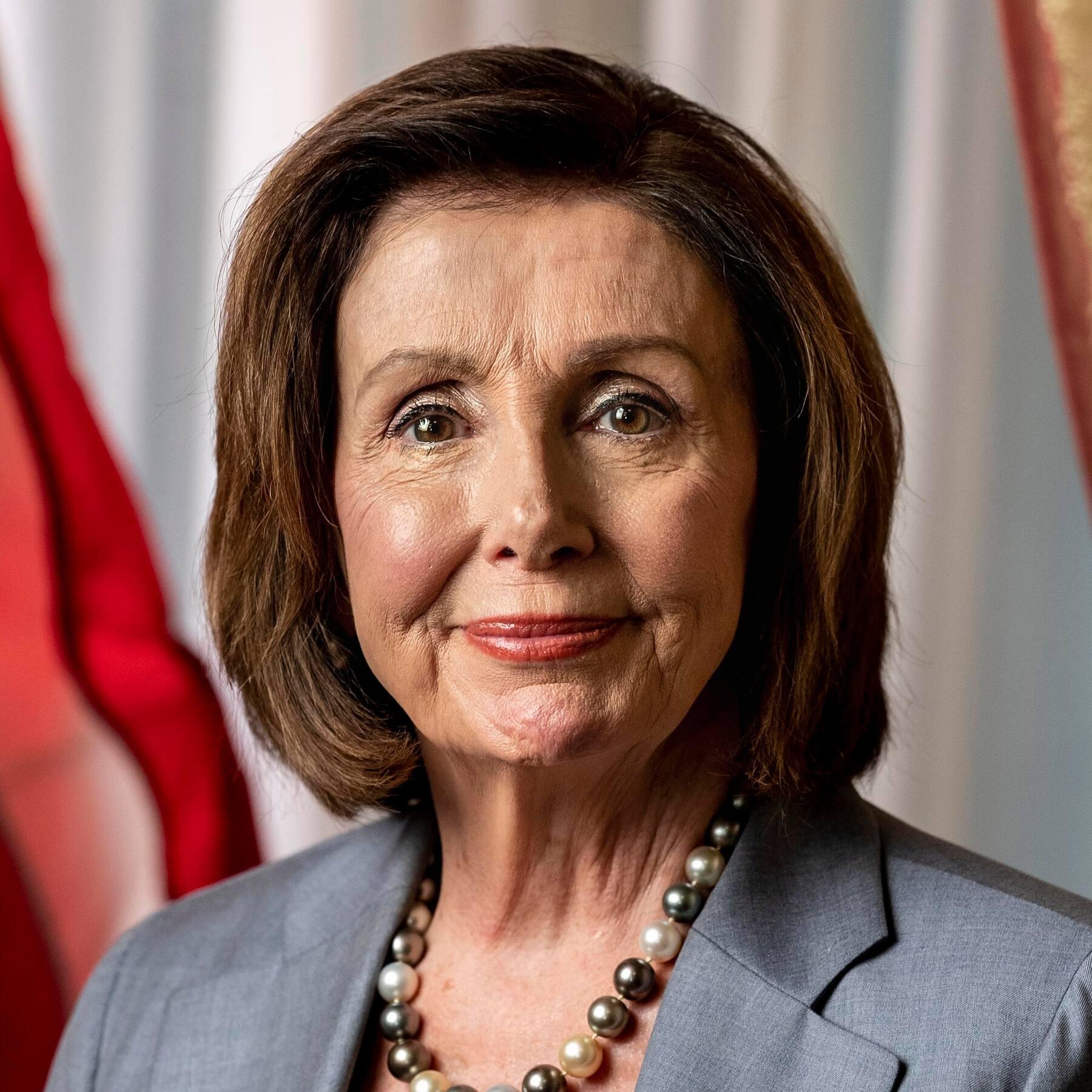
For nearly four decades, Nancy Pelosi has been one of the most recognizable figures in American politics. But long before she became the first woman to hold the Speaker’s gavel in the United States House of Representatives, she was a young woman from Baltimore, a wife, and a mother of five whose path to national leadership was far from ordinary.

Her career has included historic achievements, intense political battles, legislative negotiations, personal challenges, and moments that changed the course of American government.
In 2007, Pelosi accomplished something no woman in American history had done before: she became Speaker of the House of Representatives. The milestone placed her second in the presidential line of succession, behind the vice president, and made her one of the highest-ranking elected officials in the country.
Yet her story did not end with that achievement.
She would lose the speakership, spend years leading Democrats in the minority, return to the position in 2019, and guide the House through a pandemic, two presidential impeachments, and a period of extraordinary political division.
Then, in November 2025, Pelosi announced that she would not seek another term in Congress. Her departure, scheduled for January 2027, would bring an end to a congressional career that began in 1987.
ABC News+1
To understand how Nancy Pelosi reached this point, it is necessary to look beyond the television cameras, political headlines, and debates that have surrounded her for decades.
Her life is also a story about family, ambition, public service, changing expectations for women, and the complicated realities of political power.
A Childhood Surrounded by Politics
Nancy Patricia D’Alesandro was born on March 26, 1940, in Baltimore, Maryland.
Politics was part of her life almost from the beginning.
Her father, Thomas D’Alesandro Jr., served in the United States House of Representatives and later became mayor of Baltimore. Growing up in a politically active household gave Nancy an early understanding of elections, community relationships, and the responsibilities of public office.
While many children encountered politics mainly through newspapers or radio broadcasts, Nancy witnessed its daily operations through her family.
She saw how elected officials interacted with constituents, how communities expressed their needs, and how political organizations worked to mobilize supporters.
These experiences helped shape her understanding of public service.
Her childhood also unfolded during a period when American women faced significant limitations in professional and political life.
Women could vote and hold elected office, but they remained substantially underrepresented in Congress and in senior government leadership.
The possibility of a woman becoming Speaker of the House was still distant.
Nancy attended the Institute of Notre Dame, a Catholic girls’ school in Baltimore, graduating in 1958.
She later studied at Trinity College in Washington, D.C., earning her bachelor’s degree in 1962.
Her education placed her close to the nation’s political institutions, but her journey toward elected office would take another 25 years.
House History+1
Marriage, Motherhood, and a New Life in California
One of the most important chapters of Nancy Pelosi’s life began outside elected office.
She married Paul Pelosi, a businessman who would become her longtime partner.
Together, they raised five children.
The couple eventually settled in San Francisco, California, where Nancy became increasingly involved in Democratic Party activities.
Her family life was a significant part of her early adulthood. Raising five children required considerable time and attention, and her political career developed gradually rather than beginning immediately after college.
Her experiences as a mother also became part of the way she described her priorities in public life, particularly when discussing children, education, health care, and families.
Over time, Pelosi became active in political organizing, fundraising, and party administration.
She developed relationships with Democratic officials and gained experience managing campaigns and political operations.
From 1981 to 1983, she chaired the California Democratic Party. She later served as finance chair of the Democratic Senatorial Campaign Committee from 1985 to 1986.
These positions helped establish her reputation within the party and prepared her for the opportunity that would eventually take her to Washington as an elected representative.
House History+1
The Unexpected Opportunity That Changed Her Career
In 1987, Nancy Pelosi entered a congressional race that would transform her life.
Representative Sala Burton, who represented a San Francisco district, died while serving in Congress.
Pelosi ran in the special election to fill the vacancy.
On June 2, 1987, she won.
At 47 years old, Nancy Pelosi began her career as a member of the United States House of Representatives.
Unlike politicians who entered Congress shortly after law school or began campaigning in their twenties, Pelosi arrived with years of experience in family life, political organizing, and party leadership.
Her first election marked the beginning of a congressional career that would continue for almost four decades.
She represented San Francisco, a city known for its political activism, cultural diversity, and strong Democratic electorate.
Throughout her years in Congress, Pelosi focused on issues including health care, civil rights, environmental protection, housing, and international human rights.
Her political influence expanded as she developed relationships with colleagues and became increasingly involved in legislative strategy.
But the most consequential developments were still ahead.
House History
Breaking Barriers in Congressional Leadership
In 2001, Pelosi became House Democratic Whip, a leadership position responsible for helping coordinate party strategy and gather votes.
In 2002, House Democrats selected her as their leader, making her the first woman to lead a major political party in either chamber of Congress.
These leadership roles demanded skills different from those required of an individual representative.
A party leader must understand the priorities of lawmakers from different states and districts, negotiate disagreements, organize votes, and respond to changing political circumstances.
Pelosi became known for her detailed attention to vote counting and her ability to coordinate members of the Democratic caucus.
Supporters considered these skills essential to her legislative success.
Critics often challenged her political priorities, partisan tactics, and leadership decisions.
As her national profile grew, she increasingly became a central figure in debates over the direction of the Democratic Party.
By 2006, Democrats had regained control of the House of Representatives.
The election results created an opportunity for Pelosi to reach a position no woman had previously occupied.
HISTORY+1
January 4, 2007: The Day Nancy Pelosi Made History
On January 4, 2007, Nancy Pelosi was elected Speaker of the United States House of Representatives.
It was a historic moment.
For the first time since the establishment of the federal government, a woman held the House’s highest leadership position.
The Speaker presides over the House, plays a major role in organizing legislative business, and holds significant influence over the chamber’s agenda.
The office is also second in the presidential line of succession, following the vice president.
Pelosi’s election represented a milestone in the history of women’s participation in American government.
For generations, women had worked to expand their opportunities in public life. Their progress included winning voting rights, gaining access to professional careers, and securing positions in elected office.
Pelosi’s rise to the speakership became another significant chapter in that history.
During her first period as Speaker, from 2007 to 2011, she worked with Democratic lawmakers on issues including energy policy, economic recovery, education, and health care.
Her leadership coincided with the final years of President George W. Bush’s administration and the beginning of President Barack Obama’s presidency.
Those years would bring some of the most difficult economic and legislative challenges of her career.
The Financial Crisis and the Battle Over America’s Economy
In 2008, the United States experienced a severe financial crisis.
Major financial institutions faced collapse, unemployment rose, housing markets deteriorated, and millions of families confronted economic uncertainty.
The crisis created pressure on Congress to respond.
As Speaker, Pelosi participated in negotiations over emergency economic measures and later helped guide legislation intended to support recovery.
Following Barack Obama’s inauguration in January 2009, Congress considered the American Recovery and Reinvestment Act.
The legislation included federal spending and tax measures designed to stimulate economic activity during the recession.
Pelosi helped organize House support for the bill.
The period demonstrated both the influence and the limitations of congressional leadership.
Although the Speaker can help coordinate legislative action, major policy changes still require support from lawmakers, the Senate, and the president.
Economic recovery legislation also generated intense disagreements.
Supporters argued that federal intervention was necessary to prevent deeper economic damage.
Opponents questioned the size, effectiveness, and long-term fiscal consequences of the measures.
These disagreements reflected a broader debate over the federal government’s role in responding to economic emergencies.
For Pelosi, the financial crisis was followed by an even more contentious legislative struggle: the effort to reform America’s health insurance system.
Representative Nancy Pelosi
The Affordable Care Act: A Defining Legislative Battle
One of the central achievements associated with Pelosi’s speakership was the passage of the Affordable Care Act in 2010.
The law, often called Obamacare, was designed to expand access to health insurance and change the rules governing the American health care system.
Among its major provisions were protections for people with pre-existing medical conditions, expanded Medicaid eligibility in participating states, and the creation of health insurance marketplaces.
Pelosi played a significant role in securing the House votes needed to pass the legislation.
The process required extensive negotiations among Democrats who held different views about health care policy, federal spending, and the structure of insurance reform.
The final legislation became one of the most consequential domestic policy changes of the Obama presidency.
For supporters, the Affordable Care Act represented an important expansion of health coverage and consumer protections.
Critics argued that the law increased federal involvement in health care, created new regulatory requirements, and did not adequately resolve problems involving costs and insurance affordability.
The law remained a major political issue for years after its passage.
Pelosi continued defending it, particularly during Republican efforts to repeal or substantially change its provisions.
Whatever one’s position on the Affordable Care Act, its passage illustrates the legislative influence Pelosi exercised during her first speakership.
Representative Nancy Pelosi+1
Losing the Speakership but Remaining in Leadership
In the 2010 midterm elections, Republicans regained control of the House of Representatives.
Pelosi’s first period as Speaker ended in January 2011.
For many political leaders, losing a majority can mark the beginning of a decline in influence.
Pelosi, however, remained the leader of House Democrats.
She spent the following years working to coordinate the party’s legislative strategy while Republicans controlled the chamber.
During this period, political disagreements over federal spending, taxes, health care, and government regulation frequently dominated congressional debates.
Pelosi remained a prominent national figure and a frequent target of Republican campaign criticism.
Her continued leadership also generated discussion within the Democratic Party about generational change and whether new figures should assume senior positions.
Despite those debates, she maintained the support necessary to continue leading House Democrats.
The next major turning point came after the 2018 midterm elections.
Democrats regained the House majority, and Pelosi returned to the speakership in January 2019.
It was a rare political comeback, making her the first person in more than six decades to regain the position after losing it.
House History+1
Returning to Power During a Divided Political Era
When Pelosi became Speaker again in January 2019, the political environment was dramatically different from the one she had encountered in 2007.
Donald Trump was president.
Democrats controlled the House, while Republicans held the Senate.
Disagreements over immigration, government spending, executive authority, and federal investigations dominated national politics.
As Speaker, Pelosi became a central figure in negotiations and confrontations between the House and the Trump administration.
In 2019, the House launched an impeachment inquiry involving Trump’s dealings with Ukraine.
The House subsequently impeached him, while the Senate voted to acquit him in February 2020.
Following the January 6, 2021, attack on the U.S. Capitol, the House impeached Trump a second time.
He was again acquitted by the Senate.
Pelosi supported both impeachment proceedings, arguing that presidential accountability was necessary.
Trump and his allies disputed the allegations and criticized the proceedings as politically motivated.
The episodes reflected the deep divisions that characterized American politics during those years.
They also placed Pelosi at the center of some of the most consequential constitutional disputes of her career.
Representative Nancy Pelosi+1
Leading Congress Through the COVID-19 Pandemic
In 2020, the COVID-19 pandemic disrupted life across the United States.
Businesses closed, schools shifted to remote learning, hospitals faced extraordinary pressure, and millions of workers experienced financial uncertainty.
Congress responded with emergency legislation designed to support households, employers, health systems, and state and local governments.
Pelosi participated in negotiations over federal relief measures during both the Trump and Biden administrations.
In 2021, after Joe Biden became president, Pelosi helped guide the American Rescue Plan through the House.
The legislation included direct financial assistance to eligible households, expanded support for certain families, and funding for public health and economic recovery.
Supporters emphasized the need for government intervention during a national emergency.
Critics raised concerns about the size of federal spending, its economic effects, and whether some provisions were sufficiently targeted.
The pandemic placed congressional leaders under extraordinary pressure to make decisions while public health and economic conditions continued to change.
For Pelosi, the period became another defining chapter of her leadership.
Representative Nancy Pelosi
Infrastructure, Climate Policy, and Semiconductor Manufacturing
During the Biden administration, Pelosi also helped advance major legislation involving infrastructure, climate policy, and technology.
The bipartisan Infrastructure Investment and Jobs Act of 2021 provided funding for transportation, water systems, broadband, and other infrastructure priorities.
In 2022, Congress enacted the Inflation Reduction Act, which included significant investments and incentives related to clean energy, as well as health care and prescription drug provisions.
The CHIPS and Science Act, also enacted in 2022, aimed to strengthen domestic semiconductor manufacturing and support scientific research.
Pelosi played a role in guiding these legislative priorities through the House.
Each law generated debates over its benefits, costs, implementation, and long-term economic effects.
The legislation reflected a period in which Congress considered major questions about industrial policy, environmental priorities, and America’s economic competitiveness.
For Pelosi, these measures were among the final major legislative achievements of her time as Speaker.
Representative Nancy Pelosi
A Political Career That Reached Beyond America’s Borders
Nancy Pelosi’s career was not limited to domestic policy.
She also became involved in international human rights issues, national security debates, and U.S. relations with other countries.
Throughout her congressional service, she spoke frequently about human rights in China, including concerns involving Tibet, Hong Kong, and Uyghur communities.
In August 2022, while serving as Speaker, Pelosi traveled to Taiwan.
The visit attracted international attention because of the sensitive relationship between Taiwan, China, and the United States.
Pelosi described the visit as an expression of support for Taiwan’s democracy.
China strongly opposed the trip, viewing it as a challenge to its position regarding Taiwan.
The visit became a major diplomatic event and prompted renewed debate over U.S.-China relations and regional security.
Pelosi also supported U.S. assistance to Ukraine following Russia’s full-scale invasion in February 2022.
Her international activities demonstrated how congressional leaders can influence foreign policy debates even though the executive branch has primary responsibility for conducting diplomacy.
Representative Nancy Pelosi
The Personal Side of a Public Life
Behind Pelosi’s decades of political activity was a family whose life was often affected by her public responsibilities.
She and her husband, Paul Pelosi, raised five children and later became grandparents.
Her family remained an important part of her public identity.
However, political prominence also brought significant challenges.
In October 2022, Paul Pelosi was violently attacked inside the couple’s San Francisco home.
The assault caused serious injuries and required medical treatment.
The incident drew national attention and renewed discussion about threats, political violence, and the safety of public officials and their families.
For Pelosi, the attack brought a deeply personal dimension to the risks associated with public life.
Although her political decisions were regularly debated and criticized, the attack on her husband was a criminal act that went far beyond legitimate political disagreement.
It also illustrated how the consequences of political hostility can extend to family members who do not hold elected office.
Why Nancy Pelosi Became Such a Polarizing Figure
Few congressional leaders have attracted as much sustained national attention as Pelosi.
To understand why, it is important to consider both her institutional influence and the changing political environment in which she served.
As Speaker and Democratic leader, Pelosi was responsible for advancing her party’s legislative priorities.
That position frequently placed her in direct conflict with Republican presidents, congressional leaders, and conservative organizations.
Republican critics challenged her positions on federal spending, taxation, health care, immigration, and other issues.
Some also argued that her leadership represented a style of politics that gave too much influence to established party figures.
Supporters emphasized her experience, legislative knowledge, ability to secure votes, and role in advancing major Democratic policy goals.
Other debates concerned congressional stock trading rules, financial transparency, and whether lawmakers and their families should face stricter restrictions on investments.
These questions extended beyond Pelosi herself and became part of a larger discussion about public trust in Congress.
Her career therefore cannot be understood only through legislative victories or political criticism.
It also reflects the increasingly polarized environment in which American lawmakers operate.
Stepping Away From Democratic Leadership in 2022
In November 2022, Pelosi announced that she would not seek another term as the leader of House Democrats.
The decision marked a major transition.
After two decades leading the Democratic caucus, she made way for a new generation of party leadership.
Hakeem Jeffries subsequently became the House Democratic leader.
Pelosi remained in Congress as a representative of San Francisco.
Her decision to leave party leadership did not mean she had retired from public service.
She continued participating in congressional work, political events, and discussions about national policy.
Her title of Speaker Emerita reflected her previous service in the House’s highest leadership position.
The transition also demonstrated a broader reality of American politics: even the longest-serving leaders eventually confront questions about succession and generational change.
November 2025: The Announcement That Marked the Beginning of Her Farewell
On November 6, 2025, Nancy Pelosi announced that she would not seek reelection to Congress.
The announcement came more than 38 years after she first won her congressional seat.
Rather than seeking another term, she said she would complete her current service representing San Francisco.
Her term was scheduled to end on January 3, 2027.
The decision established a clear endpoint for a career that had included service under multiple presidents, periods of Democratic and Republican control of Congress, and major changes in American political life.
By November 2026, Pelosi was 86 years old and approaching the final weeks of her congressional tenure.
Her departure would close a chapter that began when Ronald Reagan was president and continued through decades of changes in American society and government.
ABC News
Recognition and Historical Significance
Pelosi’s career has received recognition from institutions focused on American history and public service.
In 2013, she was inducted into the National Women’s Hall of Fame.
In 2024, President Joe Biden awarded her the Presidential Medal of Freedom, the highest civilian honor in the United States.
Her place in congressional history is also documented by the House itself.
She served as Speaker during the 110th, 111th, 116th, and 117th Congresses.
Her first election to the speakership in 2007 remains a significant milestone in the history of women in American government.
The Smithsonian Institution has also documented her congressional leadership and contributions to public life.
House History+1
What Nancy Pelosi’s Story Reveals About Women and Political Power
For much of American history, political leadership positions were overwhelmingly occupied by men.
Although women had served in Congress long before Pelosi became Speaker, they remained underrepresented in senior leadership.
Her rise demonstrated that a woman could reach one of the highest offices in the federal government.
Yet the significance of her career goes beyond the symbolism of a single milestone.
Pelosi exercised the institutional responsibilities of the speakership during major legislative and constitutional events.
She negotiated with presidents, coordinated lawmakers, organized votes, and participated in debates affecting millions of Americans.
Her career also showed that political leadership can involve prolonged setbacks.
She lost the House majority in 2010 but continued leading her party.
She returned to the speakership eight years later after Democrats regained control of the chamber.
These events demonstrate how political influence can change as elections alter the balance of power.
Her experience also raises broader questions about the challenges faced by women in public office, the importance of political experience, and the responsibilities that accompany long-term leadership.
Nearly Four Decades of American History Through One Career
When Nancy Pelosi entered Congress in 1987, the United States was a different country.
The Cold War had not yet ended.
The internet had not become part of everyday life.
Women occupied a much smaller share of congressional seats.
Over the following decades, Pelosi witnessed dramatic changes in technology, the economy, national security, health care, and American political culture.
She served during the administrations of Ronald Reagan, George H. W. Bush, Bill Clinton, George W. Bush, Barack Obama, Donald Trump, and Joe Biden, and remained in Congress when Trump returned to the presidency in 2025.
Her career intersected with the end of the Cold War, the September 11 attacks, the wars in Afghanistan and Iraq, the 2008 financial crisis, the Affordable Care Act, the COVID-19 pandemic, and the January 6 attack on the Capitol.
Not every major event was shaped by her decisions, but her longevity placed her within many of the country’s most important political debates.
For historians, that extended period of service offers an opportunity to examine how congressional power operates across different administrations and changing political majorities.
A Legacy That Will Continue to Be Debated
As Pelosi approaches the end of her congressional career, assessments of her work remain divided.
Supporters point to her role in passing major legislation, her organizational abilities, and her historic achievement as the first woman Speaker.
Critics point to policy disagreements, concerns about partisan conflict, and questions surrounding long-term congressional leadership.
Both the legislative record and the controversies surrounding her career are important to understanding her place in American politics.
The consequences of laws passed during her leadership will continue to be studied and debated long after she leaves office.
The Affordable Care Act, infrastructure legislation, pandemic relief measures, and other major policies affected different communities and economic sectors in different ways.
Evaluating those effects requires examining evidence over time rather than relying solely on political praise or criticism.
Her historical distinction, however, is clear: Nancy Pelosi became the first woman to serve as Speaker of the United States House of Representatives, and she held that office during two separate periods.
That fact alone gives her a permanent place in the history of American government.
Final Thoughts: From Baltimore to the Speaker’s Chair
Nancy Pelosi’s life has followed a path that few people could have predicted when she was growing up in Baltimore.
She was raised in a politically active family, studied in Washington, married, raised five children, and gradually built a career in Democratic Party organizing.
At 47, she entered Congress.
Twenty years later, she became the first woman to hold the Speaker’s gavel.
She then experienced electoral defeats, political comebacks, major legislative battles, and intense national scrutiny.
Now, as her final congressional term approaches its conclusion, her story offers a window into almost 40 years of American political history.
It is a story of historic firsts, changing institutions, difficult negotiations, public controversy, and personal endurance.
Nancy Pelosi’s career will be remembered not only because she became the first woman Speaker of the House, but also because of the major political decisions, legislation, and national debates that unfolded during her decades in Congress.
Her departure will mark the end of a long chapter in American public life, while discussions about the consequences of her leadership will continue.
