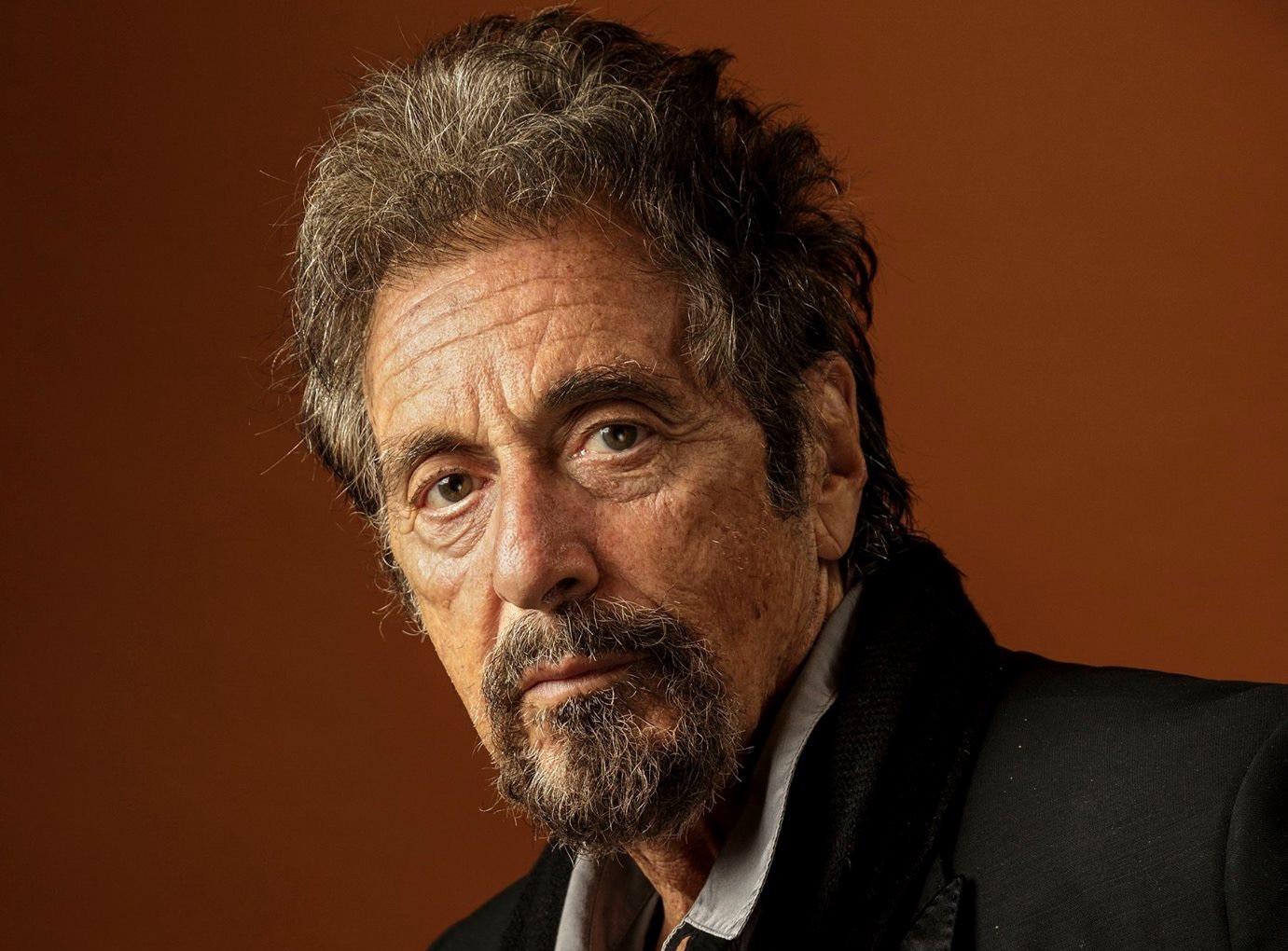

Before he became one of the most recognizable faces in Hollywood, Al Pacino was a struggling young man from New York City who had little money, an uncertain future, and a dream that seemed almost impossible to achieve.
Today, his name is synonymous with unforgettable performances, powerful dialogue, and some of the greatest characters ever brought to the big screen. From Michael Corleone in The Godfather to Tony Montana in Scarface, Pacino has spent more than five decades captivating audiences around the world.
But behind the fame, awards, and legendary movie roles lies a remarkable personal story filled with childhood hardship, rejection, ambition, sacrifice, and extraordinary determination.
At 86 years old in 2026, Pacino’s journey is a reminder that success rarely comes easily, even for people who eventually become legends.
A Childhood Far Removed From Hollywood Glamour

Alfredo James Pacino was born on April 25, 1940, in East Harlem, New York City, to Italian-American parents, Rose Gerardi and Salvatore Pacino.
His parents separated when he was very young, and his mother moved with him to the South Bronx, where they lived with her parents.
Life was not easy.
Growing up in a working-class neighborhood, Pacino experienced financial struggles and the challenges of being raised in a single-parent household. His family did not have the wealth or connections that might have opened doors in the entertainment industry.
Yet those difficult surroundings would eventually help shape the emotional depth and authenticity that audiences came to admire in his acting.
As a child, Pacino developed a fascination with movies and performance. He loved imitating characters and exploring the possibility of becoming someone entirely different through acting.
While other children dreamed of more conventional careers, Pacino became increasingly drawn toward the stage.
School, however, was another matter.
He struggled academically and eventually left school before graduating. Rather than follow a traditional educational path, he decided to pursue acting, despite the uncertainty of making a living in the profession.
It was a decision that would change his life forever.
The Years of Poverty, Rejection, and Uncertainty

Long before Hollywood producers competed for his attention, Pacino was an aspiring actor struggling to survive in New York.
He worked various jobs to support himself while pursuing his dream, including employment as a messenger, busboy, and janitor.
There were periods when money was extremely scarce and finding a stable place to live was difficult.
The glamorous life associated with movie stars was nowhere in sight.
Instead, Pacino spent his early adulthood attending auditions, studying acting, and trying to convince people that he deserved a chance.
Rejection became a familiar experience.
He was not the conventional leading man that Hollywood often favored. He was relatively short, intensely expressive, and possessed a distinctive voice and appearance.
But what some might have considered disadvantages would eventually become essential parts of his appeal.
Pacino trained at the Herbert Berghof Studio and later studied under legendary acting teacher Lee Strasberg at the Actors Studio.
His dedication to acting became almost all-consuming.
For him, acting was not simply about fame or financial success. It was about understanding human emotions, exploring complicated personalities, and bringing characters to life with honesty.
In 1962, tragedy struck when his mother died. His grandfather also died around that period.
These losses deeply affected the young actor, who was still struggling to establish himself.
Yet he continued working toward his dream.
He had no guarantee of success, but he refused to abandon the profession he loved.
The Breakthrough That Changed Everything
Pacino’s early success came through theater, where his intense performances began attracting attention.
In 1969, he won a Tony Award for his performance in Does a Tiger Wear a Necktie?, demonstrating that his talent could command the attention of critics and audiences alike.
That same year, he appeared in the film Me, Natalie.
His major cinematic breakthrough followed with The Panic in Needle Park in 1971, in which he portrayed a young man struggling with heroin addiction.
The performance was raw, vulnerable, and emotionally powerful.
It also attracted the attention of filmmaker Francis Ford Coppola, who was preparing to direct a movie based on Mario Puzo’s bestselling novel The Godfather.
Coppola believed Pacino was the right actor to play Michael Corleone, the youngest son of a powerful Mafia family.
But the casting decision was far from straightforward.
Pacino was still relatively unknown, and studio executives had reservations about giving such an important role to an actor without major box-office recognition.
Coppola continued supporting him.
Eventually, Pacino secured the role.
Neither the actor nor the studio could have fully anticipated how dramatically the film would transform his career.
The Godfather: The Role That Made Him Immortal

Alongside Marlon Brando, James Caan, Robert Duvall, and Diane Keaton, Pacino delivered a performance that would define a generation of filmmaking.
His portrayal of Michael Corleone was particularly remarkable because of the character’s transformation.
At the beginning of the story, Michael appears to be a relatively innocent outsider who wants little involvement in his family’s criminal empire.
But as the film progresses, he becomes increasingly calculating, ruthless, and emotionally distant.
Pacino communicated this transformation through subtle facial expressions, controlled dialogue, and moments of extraordinary silence.
He did not need to shout in every scene to demonstrate power.
Sometimes a simple stare revealed more than an entire speech.
The film earned Pacino his first Academy Award nomination, for Best Supporting Actor.
It also established him as one of Hollywood’s most promising young performers.
He returned as Michael Corleone in The Godfather Part II in 1974, delivering another critically acclaimed performance.
Years later, he completed the character’s story in The Godfather Part III in 1990.
For millions of movie lovers, Michael Corleone remains one of the greatest and most complex characters ever portrayed on screen.
And Pacino’s performance remains central to that legacy.
Scarface: The Film That Became a Cultural Phenomenon

Although The Godfather established Pacino as a dramatic powerhouse, another film would introduce him to an entirely different generation of fans.
In 1983, he starred as Tony Montana in Scarface.
Directed by Brian De Palma and written by Oliver Stone, the film followed a Cuban immigrant who rises through Miami’s criminal underworld to become a powerful drug lord.
Unlike Michael Corleone, Tony Montana was loud, impulsive, extravagant, and explosively violent.
Pacino embraced those qualities with extraordinary intensity.
The film initially received mixed reviews, with some critics objecting to its graphic violence and excessive language.
Over time, however, Scarface developed an enormous cult following.
Its dialogue, costumes, music, and imagery became deeply embedded in popular culture.
Tony Montana emerged as one of the most recognizable fictional gangsters in film history.
For Pacino, the role demonstrated his extraordinary range.
He could portray a quiet, calculating Mafia leader and an unpredictable criminal consumed by ambition with equal conviction.
Yet both characters shared something essential: they were deeply flawed human beings whose pursuit of power ultimately brought devastating consequences.
More Than Gangsters: A Career Built on Extraordinary Range
It would be easy to remember Pacino only for his crime dramas, but his career includes a remarkable variety of characters.
In Serpico (1973), he portrayed Frank Serpico, a New York police officer who challenged corruption within his department.
In Dog Day Afternoon (1975), he played Sonny Wortzik, a desperate bank robber whose failed robbery becomes a tense public spectacle.
Both performances demonstrated his ability to bring emotional complexity to morally complicated individuals.
In …And Justice for All (1979), he portrayed an attorney confronting corruption and ethical contradictions within the legal system.
During the 1990s, Pacino continued delivering memorable performances in films such as Dick Tracy, Glengarry Glen Ross, Carlito’s Way, Heat, and Donnie Brasco.
His confrontation with Robert De Niro in Heat became one of the most celebrated moments in modern crime cinema.
In The Devil’s Advocate (1997), Pacino explored a darker, more theatrical character, proving that he could command attention in supernatural thrillers as well as realistic dramas.
His performances were not always restrained, and critics sometimes debated his increasingly explosive acting style.
But even those disagreements reflected his unusual ability to remain a major subject of discussion after decades in the industry.
Few actors have sustained such an influential career across so many generations.
The Oscar Victory That Took Decades
Despite earning several Academy Award nominations throughout the 1970s and 1980s, Pacino did not win an Oscar until 1993.
His victory came for Scent of a Woman.
In the film, he portrayed Lieutenant Colonel Frank Slade, a blind, retired Army officer whose bitterness and emotional struggles conceal a complicated inner life.
The performance combined humor, anger, vulnerability, and moments of unexpected tenderness.
Pacino’s portrayal earned him the Academy Award for Best Actor at the 65th Academy Awards.
The achievement represented a major milestone in a career that had already produced numerous classic performances.
But the Oscar was not the end of his journey.
He continued working in films, television, and theater, demonstrating that his commitment to acting extended far beyond awards and public recognition.
Over the years, Pacino also earned Emmy Awards and Tony Awards, joining the select group of performers who have achieved the prestigious acting Triple Crown.
For someone who had once struggled to afford basic necessities, the transformation was extraordinary.
The Private Life of a Hollywood Superstar
While his professional life has unfolded in front of millions, Pacino has generally preferred to keep his personal relationships away from constant public attention.
Unlike many Hollywood celebrities, he has never married.
However, he has experienced several significant romantic relationships and is the father of four children.
His eldest daughter, Julie Marie Pacino, was born in 1989 during his relationship with acting coach Jan Tarrant.
In 2001, Pacino welcomed twins, Anton James and Olivia Rose, with actress Beverly D’Angelo.
More than two decades later, his personal life attracted international attention when he became a father again at 83.
In June 2023, Pacino and Noor Alfallah welcomed a son named Roman.
The news surprised many fans because of Pacino’s age, but it also introduced another chapter in his life.
Fatherhood has become an important subject in his later interviews. He has spoken about wanting to remain involved in his children’s lives and about how becoming a parent changed his understanding of responsibility.
His eldest daughter, Julie, has also pursued a career in filmmaking, making her feature directorial debut with I Live Here Now, released in 2026.
InStyle+1
The Personal Battles Behind the Fame
For all his achievements, Pacino’s life has not been free of personal struggles.
The enormous success of The Godfather brought fame at a level he had never experienced before.
Suddenly, a young actor who had spent years struggling to find work became one of the most recognizable people in the entertainment industry.
That transformation was not always comfortable.
Pacino has spoken openly about the pressures of celebrity, including the difficulty of maintaining privacy and adjusting to the expectations that accompany international fame.
He has also discussed his past struggles with alcohol and drugs.
In interviews surrounding his memoir, Pacino reflected on his decision to pursue sobriety and the importance of people who helped him through difficult periods.
By 2024, he had maintained sobriety for more than four decades.
His willingness to discuss these experiences revealed a side of the actor that audiences rarely encountered in his fictional characters.
Behind the confident screen presence was a man who had faced uncertainty, grief, addiction, and the pressures of extraordinary success.
People.com+1
A Terrifying Health Experience That Changed His Perspective
One of the most frightening experiences of Pacino’s later life occurred during the COVID-19 pandemic.
In 2020, he became seriously ill after contracting the virus.
Years later, while promoting his memoir, he described a medical emergency in which he lost consciousness and required urgent attention.
Pacino recalled the unsettling experience of suddenly losing awareness while medical professionals worked to help him.
The incident prompted him to reflect on mortality, memory, and the unpredictable nature of life.
For someone who had portrayed countless dramatic moments on screen, this was a frightening reality rather than a scripted performance.
He survived the medical emergency and continued discussing his experiences publicly.
His reflections offered fans an unusually personal glimpse into how one of Hollywood’s most enduring stars thinks about aging and the passage of time.
People.com+1
Sonny Boy: The Memoir That Revealed the Man Behind the Legend
In October 2024, Pacino released his memoir, Sonny Boy.
The book offered readers a personal account of his childhood, acting career, relationships, and the experiences that shaped his identity.
Rather than focusing exclusively on glamorous Hollywood memories, Pacino explored the difficult circumstances of his upbringing and the complicated journey that eventually led him to international fame.
He reflected on growing up in the Bronx, the influence of his mother, his early friendships, and the extraordinary opportunities that transformed his life.
The memoir also examined the emotional cost of success.
For fans who knew him primarily through characters such as Michael Corleone and Tony Montana, the book introduced a more vulnerable and reflective individual.
Pacino explained that part of his motivation for writing the memoir was to leave a record of his experiences for his children.
It became a bestseller, and a paperback edition was released in May 2026.
Penguin Random House Higher Education+1
At 86, Al Pacino Remains a Hollywood Icon
On April 25, 2026, Pacino celebrated his 86th birthday.
It was another milestone in a life that has already spanned some of the most transformative periods in Hollywood history.
When Pacino began acting, the American film industry looked dramatically different.
Movies were produced, distributed, and experienced in ways that younger generations might barely recognize today.
Yet his most famous performances continue to reach audiences through streaming platforms, television broadcasts, film festivals, and online discussions.
Young viewers discovering The Godfather for the first time can still appreciate the psychological complexity of Michael Corleone.
Fans watching Scarface continue to debate Tony Montana’s ambitions and destructive choices.
And students of acting still study Pacino’s ability to express intense emotions through dialogue, movement, and silence.
His influence extends beyond individual movies.
He helped redefine what a Hollywood leading man could look and sound like.
Rather than relying on conventional glamour, he built his career around emotional intensity, unusual characters, and a willingness to explore the darker aspects of human behavior.
At 86, he has continued making public appearances and maintaining connections to the film industry. His birthday celebrations and attendance at his daughter Julie’s film premiere in 2026 offered reminders that his story is still unfolding.
EW.com+1
Why Al Pacino’s Legacy Will Never Be Forgotten
Hollywood has produced countless talented performers, but only a relatively small number have fundamentally changed the way audiences understand acting.
Al Pacino belongs among them.
His greatest performances are not remembered simply because the films were commercially successful.
They endure because he created characters who felt complicated, unpredictable, and deeply human.
Michael Corleone was not merely a criminal mastermind. He was a man whose pursuit of control gradually destroyed his personal relationships.
Tony Montana was not simply a violent gangster. He represented the dangers of ambition without restraint.
Frank Slade in Scent of a Woman was not merely a bitter retired officer. He was a wounded individual searching for dignity and meaning.
Across these roles, Pacino demonstrated an extraordinary ability to make audiences understand characters even when they could not approve of their actions.
That ability is one of the defining qualities of great acting.
His career also offers an important lesson about perseverance.
He did not begin life surrounded by wealth, powerful connections, or guaranteed opportunities.
He experienced poverty, rejection, personal loss, and years of uncertainty.
He worked ordinary jobs while pursuing an extraordinary dream.
And when his opportunity finally arrived, he transformed it into one of the most remarkable careers in cinematic history.
The Boy From the Bronx Who Became a Legend
There is something deeply moving about the contrast between Pacino’s beginnings and the life he eventually built.
Imagine the young boy growing up in a modest Bronx household, watching movies and dreaming about the possibilities beyond his neighborhood.
Imagine the aspiring actor attending auditions without knowing whether he would earn enough money to support himself.
Imagine the uncertainty of accepting a role in The Godfather, unaware that the performance would make him internationally famous.
Then consider the man he became.
An Academy Award winner.
A two-time Tony Award winner.
A two-time Emmy Award winner.
A performer whose career has influenced generations of actors and filmmakers.
A father of four.
And a Hollywood legend whose work continues to captivate audiences more than half a century after his breakthrough.
At 86, Al Pacino’s greatest legacy may not be the awards displayed on a shelf or the enormous success of his most famous films.
It may be the extraordinary example of a young man who refused to surrender his dream, even when the odds seemed overwhelming.
